Threads That Tell Stories: How Malaysian Weaving Traditions Are Transforming American Living Rooms
There's a moment, collectors say, when you hold a piece of authentic Malaysian songket for the first time and something shifts. It's heavier than you expect. The gold metallic threads catch light in a way that no machine-printed fabric ever could. And when someone tells you the motif pressed into the weave represents prosperity, or protection, or the blooming of a lotus — well, suddenly a throw pillow feels like a whole lot more than décor.
Across the United States, a quiet but growing community of interior designers, cultural enthusiasts, and Malaysian-Americans is discovering what weavers in Terengganu and Kelantan have known for centuries: Malaysian traditional textiles aren't just beautiful. They're a language.
What Makes Malaysian Textiles So Different
Most Americans have encountered mass-produced "ethnic" textiles at big-box stores — block prints that were designed in a corporate office, manufactured overseas at scale, and stripped of any real cultural meaning. Malaysian songket and tenun are the opposite of that.
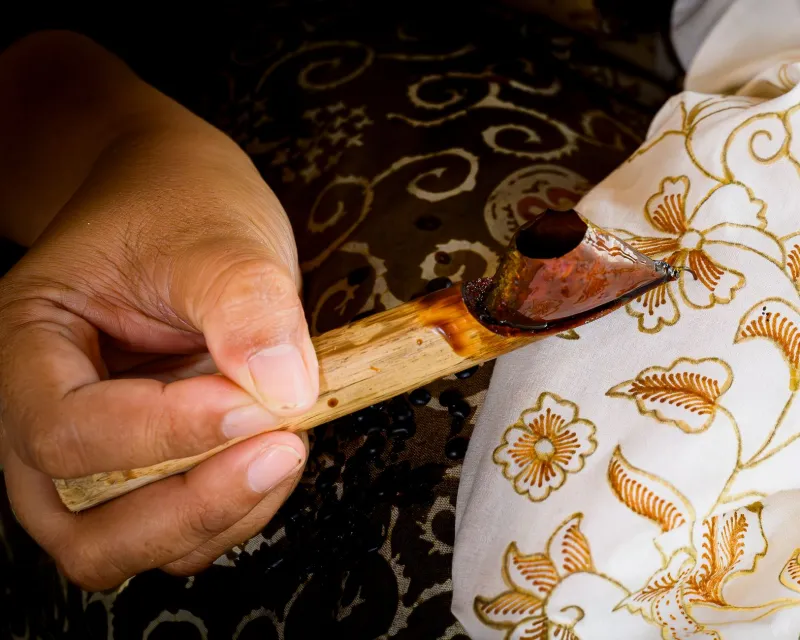
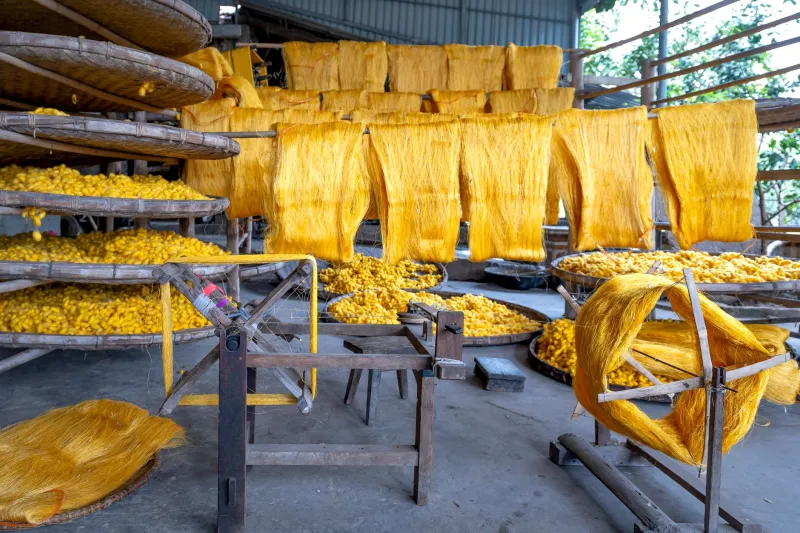
Songket, the more widely recognized of the two, is a silk or cotton fabric hand-woven with intricate patterns using gold or silver supplementary threads. The word itself is believed to derive from the Malay word sungkit, meaning to hook or to pull — a nod to the painstaking technique weavers use to lift individual threads and insert metallic yarn, row by row, for weeks or even months on a single piece.
Tenun, a broader term for hand-woven cloth, encompasses regional styles like the ikat-dyed fabrics of Pahang or the geometric brilliance of Sarawak's pua kumbu. Each tradition carries its own visual vocabulary. A bunga tabur (scattered flower) motif on a Kelantanese songket signals something different from the angular, symbolic patterns of an Iban weaver's ceremonial cloth. These aren't decorative choices — they're encoded meaning, passed down through generations of predominantly female artisans.
"Every motif has a reason for being there," says Puan Rohani, a third-generation songket weaver from Terengganu who has been practicing her craft since her early teens. "When I weave, I'm not just making something pretty. I'm continuing a conversation my grandmother started."
From Kampung to Living Room: The American Discovery
So how did these village-crafted textiles end up on the radar of American design lovers? Part of it is the broader sustainability movement pushing consumers away from fast-fashion home goods. Part of it is a growing appetite for pieces with provenance — things you can actually tell a story about when guests ask.
Jessica Tan, a Houston-based interior designer whose clients range from tech executives to boutique hotel owners, started incorporating Malaysian textiles into her projects about four years ago after her own family heritage drew her back to explore the craft.
"I'd been specifying a lot of Indian block print and Japanese linen for clients who wanted 'global' interiors," she says. "Then I visited my grandmother's home in Penang and saw a songket wall hanging she'd had for decades. The craftsmanship was on another level entirely. I thought — why isn't anyone talking about this?"
Jessica now sources pieces directly from cooperatives in Malaysia and has built relationships with weavers whose work she can vouch for. She styles songket as statement wall art, frames smaller tenun pieces as textile panels, and uses larger woven cloths as table runners or bed throws. The effect, she says, is always the same: "People stop. They ask questions. That's when I know a piece is doing its job."
A Guide to Sourcing Authentically (and Ethically)
For American buyers, the biggest challenge isn't interest — it's knowing where to start. The market for "Malaysian-inspired" textiles online is muddied by reproductions, and it can be genuinely difficult to tell a hand-woven piece from a machine-made imitation.
Here's what collectors and designers recommend:
Look for imperfection. Authentic hand-woven textiles have subtle variations in thread density, minor irregularities in pattern spacing, and slight differences in metallic thread luster. These aren't flaws — they're proof of a human hand.
Ask about provenance. Reputable sellers should be able to tell you the region the piece comes from, and ideally the name of the weaver or cooperative. Organizations like Kraftangan Malaysia (the national craft board) certify artisan products, and some US-based Malaysian cultural organizations can point buyers toward trusted sources.
Understand the price. A genuine hand-woven songket piece takes weeks to produce and may cost anywhere from $80 to several hundred dollars depending on size, complexity, and materials. If the price seems too good to be true, it probably is.
Shop during Malaysian festivals. Events like Hari Raya markets hosted by Malaysian-American community groups in cities like Los Angeles, New York, and Chicago often feature authentic textile vendors — and you get the added bonus of meeting the community behind the craft.
Styling Malaysian Textiles in a Modern American Home
The good news for design-nervous buyers: Malaysian textiles are remarkably versatile. Their rich jewel tones — deep golds, emerald greens, burgundy reds — work beautifully against both neutral minimalist interiors and warmer, maximalist spaces.
For a subtle entry point, try a small framed tenun piece as wall art in a hallway or home office. The geometric patterns read as contemporary and bold without overwhelming a space.
For something more statement-making, a full-length songket panel hung behind a bed or sofa creates a focal point that's genuinely unlike anything you'd find in a West Elm catalog — and that's entirely the point.
Jessica Tan's favorite trick? Using a songket as a table runner for dinner parties. "It becomes a conversation piece immediately. Guests lean in, ask where it's from, and suddenly you're talking about Malaysian culture over dinner. That's the magic of these textiles — they connect people."
The Weavers Who Make It Possible
For all the excitement around Malaysian textiles in American design circles, it's worth remembering that the craft is under real pressure back home. Younger generations in weaving villages are increasingly drawn to urban employment, and the painstaking skill required to produce quality songket doesn't lend itself to quick mastery. Some traditional motifs are already at risk of being lost.
Buying authentic, sourcing ethically, and being willing to pay fair prices isn't just good consumer practice — it's a small act of cultural preservation. Every piece that finds a home on an American wall or dining table is a reason for a weaver in Terengganu to keep the loom running.
Puan Rohani puts it simply: "When someone far away loves what I make, I feel like the work matters beyond just my village. It keeps me going."
That might be the most beautiful thing about Malaysian textiles. They travel thousands of miles and still carry every thread of the story they started with.