Growing Up Between Two Worlds: How Malaysian-American Parents Are Passing the Torch to Kids Who've Never Seen Kuala Lumpur
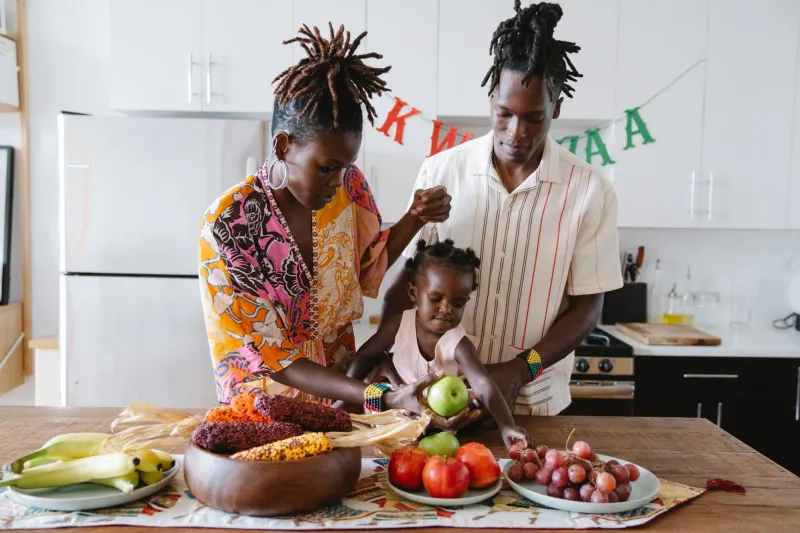
Siti Rahman's daughter, Layla, is nine years old. She was born in Houston, loves soccer, and can recite every lyric to whatever song is currently dominating TikTok. She also knows how to say makan dah? (Have you eaten yet?), insists on having teh tarik with her mom on Sunday mornings, and can tell you exactly why the hibiscus is Malaysia's national flower.
"She's American, absolutely," Siti says, laughing softly over the phone from her home in Sugar Land, Texas. "But she's also ours. She's Malaysian. I just have to keep reminding her of that — gently, consistently, without making it feel like homework."
This quiet, ongoing project — the work of keeping a homeland alive in children who've never set foot in it — is something thousands of Malaysian families across the US navigate every single day. It's not dramatic. It doesn't make the news. But it's one of the most meaningful things these parents do.
The Fear Underneath the Cooking
Ask any Malaysian-American parent what their biggest cultural fear is, and most won't hesitate: that my kids won't care.
Not that they'll forget the language, or stop eating nasi lemak, or skip Hari Raya prayers — though all of those things worry them too. The deeper fear is that their children will grow up feeling no particular pull toward Malaysia. That it will exist for them the way a distant great-grandparent's country does for most Americans — vaguely interesting, but not personal.
"I came here for a better life, and I got it," says Faizal Iskandar, a software engineer in the Seattle area who moved from Penang in 2008. "But sometimes I wonder — did I trade something for that? And now, can I give it back to my kids somehow?"
Faizal's son, Iman, is twelve. He's never been to Malaysia. The pandemic canceled two planned family trips, and tickets remain expensive. So Faizal has gotten creative.
Making Culture Tangible
One of the most powerful tools these parents reach for is food — and not just the cooking of it, but the storytelling around it.
Faizal started what he calls "Penang Fridays." Once a week, he and Iman cook something from his hometown together. Not always perfectly — "My char kway teow is nowhere near hawker-stall quality," he admits — but the point was never the food itself. It's the conversation that happens while the wok is hot.
"I tell him about the uncle who ran the stall near my school. The smell of the street at night. The way my mother used to argue with the fish seller at the wet market. He asks questions. Real questions. That's when I know it's working."
Siti has taken a similar approach, but with a recipe book. Over the past two years, she and Layla have been building a handwritten family cookbook together — complete with notes, stories, and photographs printed from family WhatsApp groups. Each recipe comes with a memory. Rendang gets a full page about Layla's nenek (grandmother) in Negeri Sembilan. Kuih lapis is paired with a photo of Siti's childhood kitchen.
"One day, when I'm gone, Layla will have this book," Siti says. "She'll have my handwriting. My mother's recipes. That's a piece of Malaysia that doesn't require a plane ticket."
The Language Question
Bahasa Malaysia is, for many second-generation kids, the first thing to slip away. English is everywhere. School is in English. Friends speak English. And Malay, without constant reinforcement, fades fast.
Most parents we spoke with have made peace with the idea that their kids will likely never be fully fluent. But they haven't given up entirely.
Nurul Huda, a nurse in the Chicago suburbs, speaks only Malay to her two children at home — a practice linguists sometimes call the "one parent, one language" approach. Her husband, who is American, has learned enough to follow along. "My kids answer me in English sometimes," she laughs. "I just respond in Malay anyway. Eventually they get the message."
Others lean on technology. WhatsApp calls with grandparents in Kuala Lumpur or Johor Bahru have become a lifeline — not just for language exposure, but for relationship-building with relatives these kids have met only once or twice in person.
"My mother video calls every Sunday," says Azman Che Ros, who lives in Atlanta with his family. "My kids are a little shy at first, every time. But by the end they're showing her their drawings, their homework, their toys. My mother cries every time she hangs up. Good tears."
Building Community Outside the Home
Parenting across cultures is hard to do alone. Many of the families we spoke with have found enormous support in Malaysian community groups scattered across the US — some formal, some just loose networks of families who found each other through mosques, Facebook groups, or university alumni connections.
In Los Angeles, a group of Malaysian families has organized monthly potluck gatherings that rotate between homes. Kids run around together while parents cook, talk, and occasionally break into old school Malaysian pop songs. "It sounds small," says one mother who asked not to be named, "but my daughter has friends now who understand what she means when she talks about Raya. That matters more than I can explain."
Some families have also enrolled their kids in weekend Malay language classes organized by Malaysian community centers — there are small but active programs in cities including New York, Houston, and the San Francisco Bay Area.
What 'Home' Actually Means
The most striking thing about these conversations wasn't the strategies — the recipe books, the language tricks, the potlucks. It was the way these parents talked about what they were really trying to give their children.
Not just culture. Not just language. Something harder to name.
"I want Iman to know that he belongs somewhere," Faizal says quietly. "America is his home. But Malaysia is also his home. He doesn't have to choose. I want him to feel big enough to hold both."
Siti puts it differently. "When Layla is older, if she ever has a hard day and she makes herself a cup of teh tarik and it makes her feel better — I'll have done my job. That's Malaysia in her hands. That's enough."
There's no single right way to raise a child between two cultures. These parents are figuring it out in real time, with love and a little improvisation. But what's clear, talking to family after family, is that the effort itself is the point. The showing up. The Sunday calls. The Friday night cooking. The handwritten recipes.
Malaysia doesn't have to be a place you've been to feel like home. Sometimes home is a story your dad tells while the wok sizzles. Sometimes it's a word your mother refuses to stop using, even when you answer her in English.
Sometimes it's enough.