Thousands of Miles from Home, Malaysian Families Are Keeping Their Traditions More Alive Than Ever
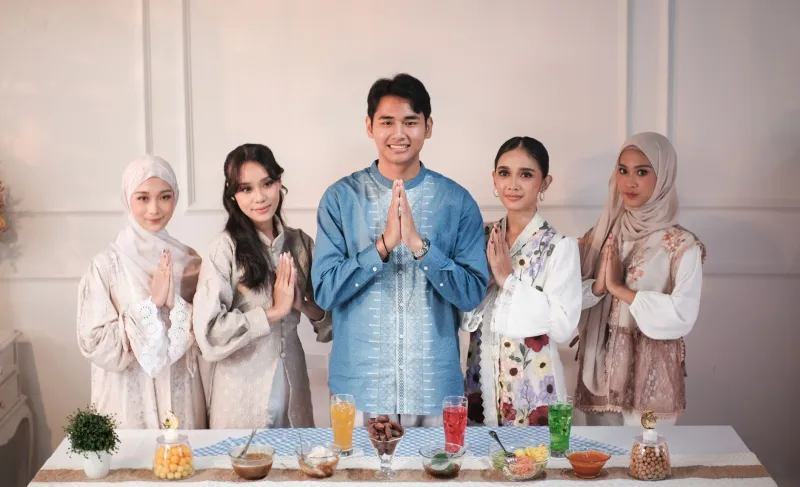
Every year, sometime in the weeks leading up to Hari Raya Aidilfitri, Nora Hashim drives forty minutes from her home in Fremont, California, to a halal grocery store in Milpitas that stocks the particular brand of pandan extract her mother used to use back in Johor Bahru. She'll spend the better part of a Saturday making kuih tart — those buttery, jam-filled pineapple cookies that are basically the taste of Eid in Malaysia — in a kitchen that looks nothing like her childhood home but smells exactly like it.
"My daughters know that when the kuih tart smell fills the house, Raya is coming," she says, laughing. "It's become our signal. Our version of a countdown."
For the Malaysian diaspora spread across the United States — in cities like Houston, Los Angeles, Chicago, and New York — maintaining cultural traditions isn't always easy. There's no public holiday, no kampung full of relatives next door, and no pasar malam selling ready-made festive foods around the corner. But what's emerging in these communities is something remarkable: a deeply personal, creatively adapted, and fiercely committed form of cultural continuity that in some ways feels even more intentional than what happens back home.
The Three Pillars of the Malaysian Festive Calendar
Malaysia's multicultural makeup means its festive calendar is genuinely one of the richest in the world. Hari Raya Aidilfitri marks the end of Ramadan for Muslim Malaysians. Chinese New Year is celebrated with lanterns, lion dances, and family reunions. Deepavali, the Hindu Festival of Lights, fills neighborhoods with oil lamps and the scent of fresh flowers.
Back in Malaysia, these aren't just community events — they're national ones. Schools close. Offices shut. The whole country participates, regardless of ethnicity or religion. Neighbors of different backgrounds visit each other's homes. That communal dimension is one of the hardest things to replicate abroad.
"In Malaysia, Deepavali wasn't just my family's celebration — it was everyone's," says Priya Krishnaswamy, who grew up in Ipoh and now lives in New Jersey with her husband and two teenage sons. "My Malay neighbors would come over. My Chinese school friends would eat my mom's murukku. Here, I have to work harder to create that openness."
Her solution? An open-house policy she's maintained for fifteen years. Every Deepavali, she invites her American neighbors, her sons' school friends, and colleagues from her office. She makes vadai, murukku, and payasam from scratch. She sets up a small oil lamp display by the front door. "Most of my American guests have never experienced Deepavali before. Watching them learn about it — that actually makes the celebration feel more meaningful, not less."
Second-Generation Voices: What Tradition Means When You Grew Up Between Two Worlds
For the children of Malaysian immigrants, cultural identity is a more complicated negotiation. They're often caught between two sets of expectations — fitting in at school while honoring something different and precious at home.
Adam Lim, twenty-six, grew up in suburban Houston with parents from Kuala Lumpur. Chinese New Year in his household meant red envelopes, yee sang tossed with chopsticks for prosperity, and a marathon of phone calls to relatives in Malaysia. But at school, none of his friends knew what any of it meant.
"For a while in middle school, I was kind of embarrassed by it," he admits. "I didn't want to explain why I was tired on a Monday because we'd been celebrating all weekend. But then something shifted. I started realizing this was actually cool — I had this whole other world that most of my friends didn't have access to."
Now working in tech in Austin, Adam hosts his own Chinese New Year gathering every year. He's taught himself to make tang yuan and nian gao from YouTube tutorials and his mom's voice notes. "The recipes aren't perfect. My nian gao is sometimes a bit dense. But the act of making it — that's what matters."
That sentiment — that imperfect tradition is still tradition — comes up again and again in conversations with second-generation Malaysian-Americans. The point isn't replication. It's connection.
Practical Magic: How Families Actually Make It Work
Keeping traditions alive across an ocean requires a mix of creativity, community, and sheer stubbornness. Here's what Malaysian-American families have figured out.
Build a community of fellow Malaysians. Most major US cities have Malaysian student associations, cultural clubs, or WhatsApp groups that organize collective celebrations. These networks are invaluable — not just for the events themselves, but for the everyday sharing of recipes, tips, and moral support.
Use technology as a bridge, not a substitute. Nora's family in Johor Bahru joins their Raya morning prayers via video call. Priya's mother in Ipoh walks her through recipes on FaceTime. These connections don't replace being there, but they make the distance feel smaller.
Adapt without abandoning the essence. Adam makes yee sang with ingredients from his local H-E-B supermarket. Nora substitutes certain hard-to-find ingredients in her kuih recipes. "The spirit of the dish is preserved even if the exact ingredients aren't," she says. "My mom always told me that cooking is about intention."
Teach the stories, not just the rituals. Several parents we spoke to emphasized that explaining why a tradition exists is just as important as performing it. When children understand the meaning behind the oil lamps of Deepavali or the significance of green packets at Raya, the tradition becomes theirs to carry forward — not just a family obligation.
What Gets Lost, What Gets Gained
It would be dishonest to pretend that nothing is lost in translation. The spontaneity of a Malaysian Raya — the open houses you can drop into unannounced, the cousins you see every year without planning — is genuinely hard to recreate in the US. The collective energy of a neighborhood celebrating together doesn't have a perfect American equivalent.
But something else grows in its place: intentionality. When you have to choose to celebrate, when it costs effort and planning and sometimes a forty-minute drive for the right pandan extract, the celebration means something different. It becomes an act of identity. A declaration.
"My kids are American. That's real," Priya says. "But they're also Malaysian. And I want them to feel the weight and the joy of that — not as a burden, but as a gift."
For families like hers, every kuih tart baked, every oil lamp lit, every gong xi fa cai sung across a video call to grandparents in Penang is a small, defiant act of love. A way of saying: we are still here, we still remember, and we're passing this on.
That, more than any single tradition, is the heart of what Malaysian culture carries into the world.