What Malaysia Taught Me About Welcoming People: The Quiet Power of Sambut Tetamu
When a Guest Arrives, Everything Else Waits
Imagine knocking on a friend's door and, before you've even finished saying hello, there's already a glass of cold water in your hand, a plate of kuih on the table, and someone pulling out the best chair in the room — just for you. No checking phones. No half-distracted "make yourself at home" while the host disappears into the kitchen. Just full, unhurried presence.
That's not a scene from a feel-good movie. That's a Tuesday afternoon in a Malaysian household.
The Malay concept of sambut tetamu — which translates roughly to "receiving" or "welcoming guests" — is one of those cultural practices that sounds simple until you actually sit with what it means. It's not just about being polite. It's a whole philosophy about how human beings should treat one another, rooted in Islamic values, Malay adat (customary traditions), and a deeply communal worldview that says: when someone crosses your threshold, they matter more than whatever you were doing before they arrived.
For many Americans, that idea alone might feel a little radical.
The Roots Run Deep
Malaysian hospitality didn't emerge from a lifestyle blog or a Pinterest board. It evolved over centuries, shaped by the country's position as a historic trading crossroads where Malay, Chinese, Indian, and indigenous communities learned to coexist — and to feed each other.
In traditional Malay culture, turning away a guest or receiving them with anything less than warmth carries real social weight. There's even a saying, "Tetamu adalah rahmat" — guests are a blessing. That framing is everything. In a culture where guests are seen as gifts rather than inconveniences, the entire energy of hosting shifts.
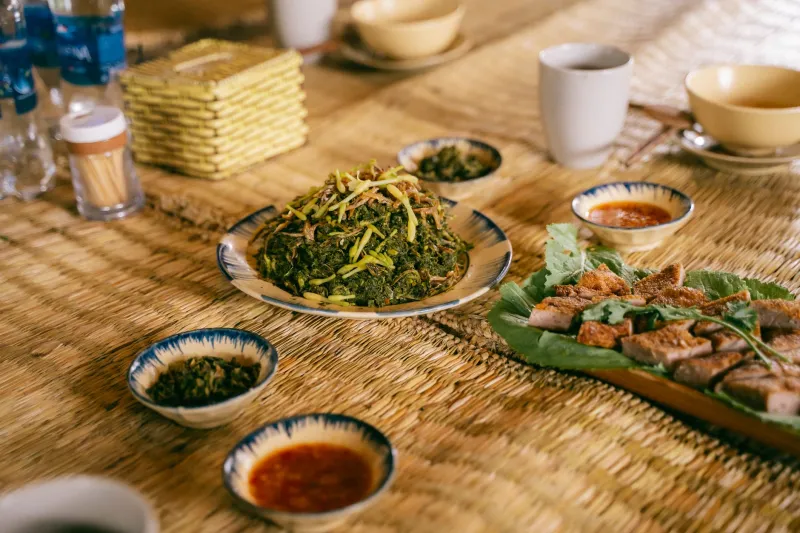
The rituals that flow from this belief are specific and intentional. Guests are greeted at the door, not waved in from the couch. Food and drink appear almost immediately — not because the host had been planning a dinner party, but because feeding someone is simply what you do. The best seat is offered. Conversations aren't rushed. And when guests leave, they're often sent home with something: a container of leftovers, a bag of fruit, a small token that says you were here and that meant something.
These aren't grand gestures. They're small, consistent acts of care that accumulate into something profound.
What Americans Can Actually Learn Here
Let's be honest: American hospitality culture is a bit all-or-nothing. We either throw elaborate dinner parties that take weeks to plan and leave us exhausted, or we barely open the door without apologizing for the state of the living room. We've somehow convinced ourselves that hosting requires perfection — a clean house, a curated menu, the right playlist.
Sambut tetamu quietly dismantles all of that.
The tradition doesn't ask you to be ready. It asks you to be willing. There's a meaningful difference. A Malaysian home doesn't need to look like an Airbnb before guests are welcome inside. What matters is the quality of attention you give once they're there. Can you put down your phone? Can you make eye contact and actually listen? Can you offer something — even just a glass of water — as a physical symbol that says your presence here is valued?
That's the real practice. And honestly? It's not that hard. It just requires a small but deliberate shift in how we think about other people's time versus our own.
It Shows Up in Business, Too
One of the more surprising things about sambut tetamu is how naturally it extends beyond the home. In Malaysian business culture, meetings often begin with tea, light snacks, and genuine small talk before anyone opens a laptop. This isn't inefficiency — it's relationship-building baked into the structure of professional life.
For Americans accustomed to diving straight into agendas and circling back to "action items," this can feel almost disorienting. But there's real wisdom in it. Studies on cross-cultural communication consistently show that trust is built through personal connection before it's built through competence. By slowing down the start of an interaction, Malaysian professionals are investing in the long game — relationships that hold up under pressure because they were never purely transactional to begin with.
Small businesses, community organizations, and even workplaces in the US could genuinely benefit from borrowing a page from this playbook. What would it look like to start your next team meeting with five minutes of actual human conversation? What if your next client call opened with a real question about how they were doing — and you waited for the real answer?
Building Community, One Open Door at a Time
There's a loneliness epidemic happening in America right now. Researchers, public health officials, and former Surgeon General Vivek Murthy have all pointed to it: people are more digitally connected and more socially isolated than ever before. We have more ways to communicate and fewer deep relationships. Neighborhoods where people don't know each other's names. Apartment buildings where eye contact in the elevator feels awkward.
Sambut tetamu offers a quietly powerful antidote.
It doesn't require a cultural overhaul or a community initiative with a logo and a steering committee. It starts with one open door, one offered drink, one moment where you choose to be fully present with another human being. Malaysian families who've immigrated to cities like Houston, Los Angeles, and Chicago often describe their homes as gathering places — spaces where the door is always figuratively (and sometimes literally) open, where the rice cooker is always on, and where neighbors, friends, and near-strangers are welcomed with the same warmth.
That kind of home becomes a community anchor. And community anchors are exactly what American neighborhoods are starving for right now.
Bringing It Home
You don't have to fly to Kuala Lumpur to practice sambut tetamu. You don't have to be Malaysian, Muslim, or even particularly good at cooking. You just have to decide that the people who show up in your life — expected or not — deserve your full, unhurried attention.
Next time a neighbor stops by, resist the urge to apologize for the mess. Offer them something to drink. Sit down. Ask a real question. Let the conversation take as long as it needs to take.
That's it. That's the whole tradition, distilled.
And if it feels strange at first — if the slowness feels inefficient or the openness feels vulnerable — that's okay. Culture is just habit at scale. Start small. Start with one guest, one glass of water, one genuine welcome.
Malaysia figured out a long time ago that the way you receive people says everything about who you are. It's a lesson worth learning, no passport required.