5 Legendary Malaysian Street Foods You Can Actually Cook in Your American Kitchen Tonight
The Night Market Is Closer Than You Think
There's something almost cinematic about a Malaysian pasar malam — a night market. The sizzle of satay over charcoal. The steam curling up from a bowl of laksa. The hypnotic sound of roti canai dough being stretched and slapped against a hot griddle. Vendors who've been perfecting the same dish for thirty years, serving it out of a cart barely bigger than a card table.
For Malaysians living in the US, these memories are the kind that hit hardest at 9 p.m. on a Wednesday when you're staring into a refrigerator full of nothing that feels right. And for Americans who've never been to Malaysia — or who caught a travel documentary and immediately started Googling flights — that world can feel maddeningly out of reach.
Here's the good news: it's not. Not anymore.
With Asian grocery stores spreading across the country, online spice retailers shipping overnight, and a growing community of Malaysian home cooks sharing their knowledge freely, recreating these dishes in a US kitchen has never been more doable. Below are five of the most beloved Malaysian street foods, complete with beginner-friendly recipes, sourcing tips, and the personal stories that make each one more than just dinner.
1. Chicken Satay (Satay Ayam)
The dish: Marinated chicken skewers grilled over open flame and served with a rich, slightly sweet peanut sauce. This is Malaysia's most internationally recognized street food, and for good reason — it's phenomenal.
The story: Farah, a Malaysian home cook living in Austin, Texas, says satay is the first thing she makes whenever she's homesick. "My dad used to buy it from the same uncle every Friday night after prayers. The smell of the smoke — I can't explain it. When I make it at home, even if it's just a gas grill, it brings something back."
How to make it: Blend together lemongrass, turmeric, garlic, shallots, coriander, cumin, and a little brown sugar into a marinade. Coat thinly sliced chicken thigh pieces (thighs stay juicier than breast on a grill) and let them sit for at least two hours — overnight is better. Thread onto skewers and grill on high heat, turning frequently. The peanut sauce comes together with blended roasted peanuts, coconut milk, tamarind paste, palm sugar, and dried chilies.
Where to find the hard stuff: Lemongrass is now carried at most Whole Foods and Trader Joe's locations. Tamarind paste and palm sugar are available at any Asian grocery store — look for H Mart or 99 Ranch Market if you have one nearby — or order from ImportFood.com or Amazon.
2. Penang Char Kway Teow
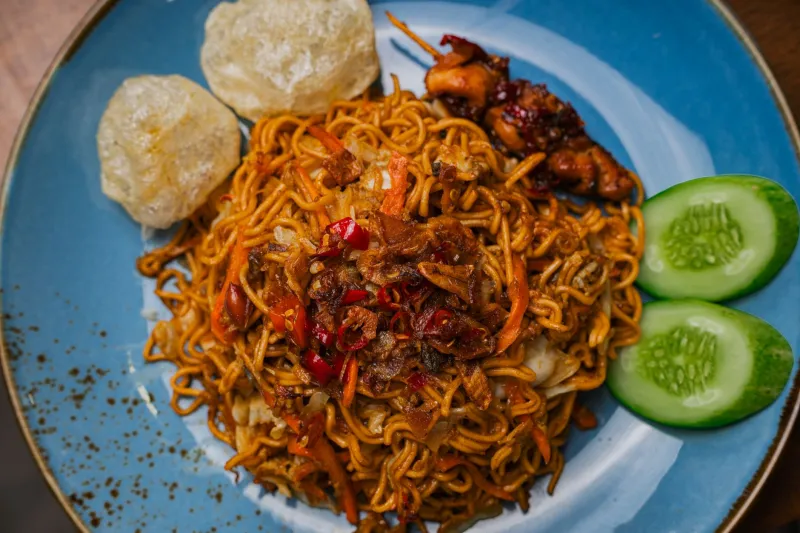
The dish: Flat rice noodles stir-fried in a blazing hot wok with shrimp, Chinese lap cheong sausage, bean sprouts, eggs, and a savory-sweet soy-based sauce. It's smoky, slightly charred, and deeply addictive.
The story: "Char kway teow is a Penang thing," explains Daniel, who grew up in George Town and now lives in San Jose. "If you're from Penang, you will argue about whose version is the best. It's basically a religion. My mom's version uses duck eggs, which makes it richer. I've been trying to recreate it here for five years. I'm getting close."
How to make it: The secret is wok hei — the smoky, slightly charred quality that comes from cooking over extremely high heat. A cast iron skillet on your highest burner can approximate this. Use fresh flat rice noodles (kway teow) if you can find them; dried will work in a pinch. The sauce is a mix of dark soy sauce, regular soy sauce, oyster sauce, and a pinch of sugar. Cook in small batches so the pan stays hot. Add the noodles last, let them sit undisturbed for 30 seconds before tossing — that's where the char happens.
Where to find the hard stuff: Fresh kway teow noodles are available at most Asian grocery stores. Lap cheong (Chinese sausage) is sold at H Mart and online at Weee!, a popular Asian grocery delivery service that ships nationwide.
3. Laksa
The dish: A spiced coconut milk noodle soup that exists in regional variations across Malaysia — the most famous being Penang assam laksa (tangy and fish-based) and Curry Laksa (rich, coconut-forward). Both are extraordinary. We're starting you with Curry Laksa.
The story: Siti, a Malaysian nurse living in Chicago, says laksa is what she makes on her days off when she needs to feel taken care of. "It takes time, but that's kind of the point. Making laksa is meditative. You're building something layer by layer. By the time you sit down to eat it, you've already done something good for yourself."
How to make it: The laksa paste is the foundation — blend together dried chilies (rehydrated), lemongrass, galangal, shrimp paste (belacan), turmeric, candlenuts, and shallots. Fry this paste in oil until fragrant, then add chicken stock and coconut milk. Simmer with kaffir lime leaves and lemongrass stalks. Cook rice vermicelli separately, top with shredded chicken, tofu puffs, bean sprouts, and a hard-boiled egg. Finish with a squeeze of lime.
Where to find the hard stuff: Galangal and kaffir lime leaves can be found frozen at most Asian grocery stores. Belacan (fermented shrimp paste) is the ingredient that intimidates most beginners — it smells intense, but it's essential. Find it at H Mart, or substitute a small amount of fish sauce if needed. Pre-made laksa paste (brands like Tean's Gourmet or Prima Taste) are available on Amazon and are a legitimate shortcut for weeknight cooking.
4. Roti Canai
The dish: A flaky, layered flatbread cooked on a flat griddle, served with a side of curry dipping sauce. It's the Malaysian equivalent of a warm, buttery croissant — except you dip it in curry, which makes it better.
The story: "Roti canai is breakfast, but also it's midnight snack, also it's whenever," laughs Priya, a Malaysian-Indian home cook in Dallas. "The roti man at the mamak stall near my school — I swear he could flip that dough in his sleep. It flies through the air and lands perfectly. I've been practicing for years. Mine doesn't fly, but it tastes right."
How to make it: Mix flour, salt, sugar, egg, butter, and water into a soft dough. The key is resting — let it sit for at least four hours, divided into small balls coated in oil. When ready, stretch each ball as thin as you possibly can on an oiled surface (you should almost be able to see through it), fold it into layers, and cook on a very hot, lightly oiled griddle. The layers are what create the flakiness. Serve with store-bought curry sauce or a simple dhal.
Where to find the hard stuff: Everything for roti canai is available at a standard American grocery store. The only thing you need is patience and a willingness to let the dough rest properly.
5. Nasi Lemak
The dish: Often called Malaysia's national dish, nasi lemak is coconut rice served with crispy fried anchovies, roasted peanuts, a hard-boiled egg, cucumber slices, and sambal — a spiced chili paste that ties everything together.
The story: "Nasi lemak is not fancy," says Hafiz, who moved from Kuala Lumpur to Seattle three years ago. "It's what you eat wrapped in banana leaf at a roadside stall at 7 a.m. before work. But it's also what you make for someone when you love them. My wife made it for me on our first anniversary here in America. I cried a little. I'm not ashamed."
How to make it: Cook jasmine rice in a mix of coconut milk and water with a pandan leaf and a pinch of salt — this is your coconut rice. For the sambal, blend dried chilies, onion, garlic, shrimp paste, and tamarind juice, then fry in oil with a little sugar until dark and fragrant. Fry dried anchovies (ikan bilis) until crispy. Plate the rice, arrange the accompaniments around it, and spoon sambal generously on top.
Where to find the hard stuff: Dried anchovies (ikan bilis) and pandan leaves (fresh or frozen) are available at H Mart or online through WeeeAsia or ImportFood. Pandan extract can substitute for the leaf in a pinch.
The Real Ingredient
Every one of these dishes carries something that no recipe can fully capture: the memory of a specific place, a specific person, a specific moment when food and belonging were the same thing. That's what Malaysian street food really is — not just flavor, but connection.
When you make these dishes at home, you're not just following a recipe. You're participating in something that millions of people across Malaysia and the Malaysian diaspora do every day to stay tethered to who they are and where they come from.
That's worth a trip to H Mart. That's worth the four-hour roti dough rest. That's worth every single minute.