Kopi, Community, and a Little Bit of Chaos: How Malaysian Kopitiam Culture Is Shaking Up the American Coffee Scene
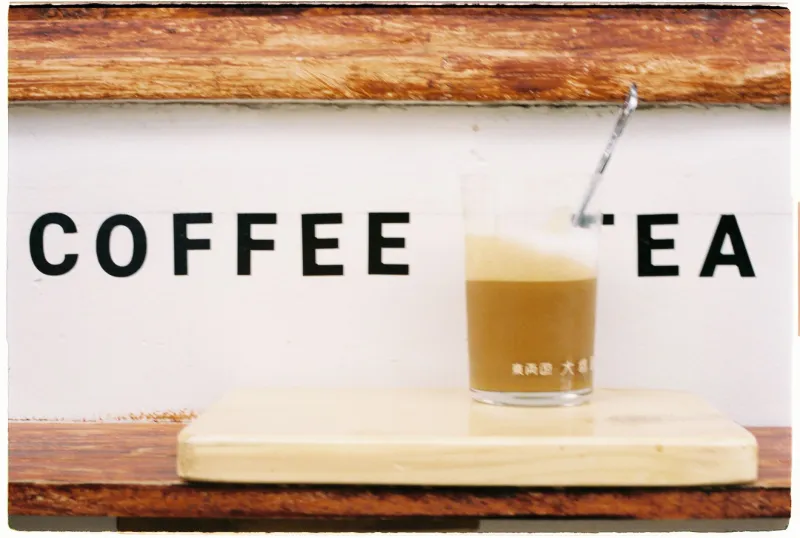
Walk into a traditional Malaysian kopitiam at seven in the morning and your senses get hit from every direction at once. The clatter of ceramic cups. The hiss of a charcoal flame beneath a cloth sock strainer. The smell of dark-roasted coffee beans — often roasted with sugar and butter in a distinctly Southeast Asian style — curling through air already thick with the scent of toast and eggs. A table of uncles arguing about football. A grandmother reading a Chinese newspaper. A kid in a school uniform slurping up a bowl of curry laksa before 8 a.m.
It is, by American coffee shop standards, completely chaotic. It is also, for millions of Malaysians, the most comforting place in the world.
And now it's coming to a city near you.
What Is a Kopitiam, Exactly?
The word kopitiam blends the Malay word for coffee (kopi) with the Hokkien word for shop (tiam). It's a product of Malaysia's deeply layered multicultural history — a Chinese-origin institution that became central to Malay, Indian, and Chinese communities alike, serving as neighborhood anchor, social hub, and morning ritual all rolled into one.
The coffee itself is unlike anything you'll find at a standard American café. Traditional kopi is brewed by pulling hot water through a sock-like cloth filter packed with coarsely ground, sugar-roasted beans. The result is thick, slightly syrupy, and intensely aromatic. Order it kopi-o and you get it black with sugar. Kopi susu brings in sweetened condensed milk for a rich, caramel-edged cup that's become something of a cult obsession among American food tourists who've visited Malaysia.
But kopitiam culture was never really about the coffee alone. It was about the table you shared, the conversation that stretched past breakfast, the sense that this place was yours and your neighbors' and your community's — not a corporation's.
The American Coffee Landscape Gets a Wake-Up Call
American coffee culture has gone through dramatic shifts over the past two decades. The first wave gave us canned Maxwell House. The second wave gave us Starbucks on every corner. The third wave brought single-origin pour-overs, precise extraction times, and baristas who can explain terroir with the seriousness of a sommelier.
But somewhere in the pursuit of craft and premium pricing, something got lost. The corner coffee shop as community space — as a place that belongs to a neighborhood rather than a brand — has become increasingly rare.
That's the gap that kopitiam-inspired spaces are stepping into.
"Third-wave coffee is incredible, technically speaking," says Kevin Lim, who opened a Malaysian-inspired coffee counter called Kedai in Philadelphia's Fishtown neighborhood two years ago. "But sometimes you just want to sit somewhere that doesn't feel like a design portfolio. You want noise. You want people. You want your coffee to taste like someone actually made it for you."
Kevin grew up in Kuala Lumpur and moved to Philly for grad school. He started Kedai after years of being unable to find the kind of coffee experience he missed from home. The menu centers on traditional kopi preparations alongside teh tarik — the dramatic poured-and-pulled milk tea that's practically a performance art form in Malaysia — and a rotating selection of roti bakar (charcoal toast with kaya butter) and soft-boiled eggs.
The space itself is deliberately low-key. Mismatched chairs. Marble-topped tables worn smooth at the edges. A hand-lettered chalkboard menu. No Wi-Fi password posted anywhere visible. "I want people to talk to each other," Kevin says, grinning.
More Than a Menu
In Houston — home to one of the largest Malaysian communities in the US — a collective called Warung Kita ("Our Stall") has taken the kopitiam concept even further, operating as a rotating pop-up that partners with different neighborhood venues each month. The goal isn't just to serve Malaysian coffee. It's to use the kopitiam format as a model for community-building.
"In Malaysia, the kopitiam is where the neighborhood actually happens," says co-founder Sharifah Nadia Osman. "Old people, young people, different races, different religions — everyone at the same tables. That's not an accident. That's the design. We want to bring that design here."
Warung Kita events typically feature live music, rotating local food vendors, and informal language exchange tables where Malay speakers and learners can practice together over cups of kopi-o. They've drawn crowds that are roughly half Malaysian-American and half curious locals — a mix that Sharifah says feels exactly right.
"The kopitiam was never meant to be exclusive," she says. "It was always a place for everyone. That's what we're trying to recreate."
The Kaya Toast Moment
If there's a single menu item that keeps coming up in conversations about the American kopitiam movement, it's kaya toast. Two slices of charcoal-grilled white bread, a thick spread of kaya — a coconut-egg jam infused with pandan — and a cold slab of butter sandwiched in between. Served alongside soft-boiled eggs seasoned with dark soy sauce and white pepper, and a cup of kopi susu.
It's a breakfast that sounds simple and tastes like a revelation.
"Every time someone tries it for the first time, there's this moment," says Kevin from Kedai. "They kind of go quiet. And then they look up and say, 'why have I never had this before?' That's the moment I live for."
Food writers at outlets like Eater and The Infatuation have started paying attention. Social media has amplified the aesthetic appeal of the drinks — teh tarik poured in a long, foamy arc photographs beautifully — but the people building these spaces are quick to point out that the visuals are almost beside the point.
Slow Coffee in a Fast World
What the kopitiam ultimately offers — and what seems to be resonating with American audiences — is a different pace. You don't grab a kopitiam coffee on your way somewhere. You sit down. You stay a while. Maybe you talk to the person at the next table. Maybe you don't say anything at all, but you're still, somehow, together.
In a country where coffee culture has become increasingly transactional — order on the app, pick up at the counter, consume on the go — the Malaysian kopitiam tradition is quietly making the case for something older and slower.
"Coffee in Malaysia is never just coffee," Sharifah says. "It's an excuse to be with people. I think Americans are hungry for that. They just didn't know there was a name for it."