Stitch It Back Together: How the Malaysian Spirit of 'Baiki' Is Quietly Rewiring American Attitudes Toward Throwaway Fashion
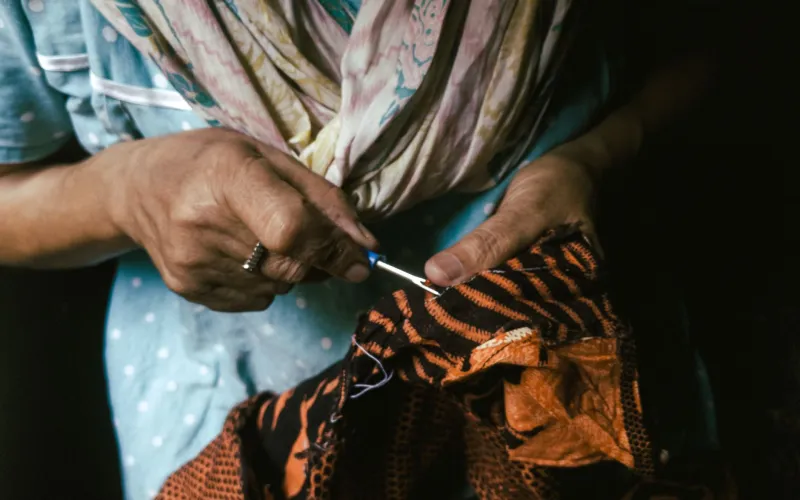
There's a tailor shop in the back of a strip mall in Petaling Jaya that has been open since 1987. The owner, a soft-spoken man in his sixties, has resoled sandals, re-stitched batik blouses, and patched up school uniforms for three generations of the same families. He doesn't advertise. He doesn't need to. In Malaysia, you don't throw things away just because they're worn. You bring them to someone who knows how to bring them back.
That quiet ethic — the one embedded in the Malay word baiki, meaning to repair, to fix, to restore — traveled across the Pacific with the Malaysian diaspora. And right now, in cities like Houston, Seattle, and Philadelphia, it's finding a surprisingly enthusiastic audience.
What 'Baiki' Actually Means
Translating baiki as simply "repair" undersells it a little. In the Malaysian cultural context, fixing something carries intention. It's not just about saving money, though that's a practical benefit. It's about honoring the object, the craft that made it, and the person who will use it again. Malaysian grandmothers didn't mend sarongs because they couldn't afford new ones — they mended them because those sarongs meant something.
"My mom had this old kebaya she wore to my parents' wedding," says Nurul Ain Hassan, a Malaysian-American seamstress based in Austin, Texas. "It had a tear along one sleeve. Back home, that would have gone straight to a mak cik down the road who could fix it in an afternoon. Here, my American friends were like, just buy a new one. But you can't buy a new one. That's the whole point."
Nurul now runs weekend mending workshops out of a community craft space in East Austin, where she teaches basic hand-stitching, fabric patching, and the Japanese-influenced sashiko technique — which she's quick to point out shares a spiritual cousin in the Malaysian tradition of decorative embroidery used to reinforce worn cloth. Her classes fill up within days of being announced. The waitlist is mostly American women in their thirties who are, in her words, "exhausted by the cycle of buying and throwing away."
Fast Fashion's Quiet Casualty
The United States generates roughly 17 million tons of textile waste every year, according to the EPA. The average American throws away about 70 pounds of clothing and textiles annually. Fast fashion brands have made it so cheap and easy to replace that the idea of repairing feels almost quaint — or worse, like an admission that you can't afford something new.
That stigma is exactly what Malaysian-Americans like Nurul are pushing back against.
"In Malaysia, taking something to be repaired is normal. It's not embarrassing," she says. "There are cobblers at every pasar malam. There are tailors in every neighborhood. The infrastructure exists because the culture supports it. Here, that infrastructure has mostly disappeared, and so has the mindset."
Farouk Ismail, a Malaysian-American sustainability educator in Portland, Oregon, makes a similar point when he runs what he calls "heritage repair" pop-ups at local farmers markets. He brings basic tools — needles, thread, leather punches, fabric glue — and invites people to bring their broken things. The conversations that follow, he says, are rarely just about sewing.
"People start talking about their grandparents. About things they kept for years before finally throwing them out. There's a grief there," Farouk says. "We've been trained to feel like holding onto old things is hoarding, not honoring. I think a lot of Americans are ready to unlearn that."
The Spiritual Thread
For many Malaysians, the act of repair isn't separate from spiritual life — it's woven right into it. The concept of jangan membazir (don't waste) appears throughout Islamic teachings that are central to Malay culture, and it extends well beyond food into clothing, tools, and everyday objects. Waste, in this framework, isn't just an economic problem. It's a moral one.
Siti Rahmah Zulkifli, who grew up in Kelantan and now lives in suburban New Jersey, teaches her three American-born kids to mend their own clothes as a form of gratitude practice.
"I tell them, this shirt was made by someone's hands. Someone grew the cotton, someone spun it, someone cut and sewed it. When you just throw it away, you're erasing all of that," she says. "When you fix it, you're saying: this still has value. I still see it."
She's started hosting small mending gatherings at her home — a rotating group of neighborhood moms, mostly non-Malaysian, who come over on Sunday afternoons to work on their piles of torn and worn clothing while the kids play in the backyard. It started as a practical thing. Now it feels like something more.
"We talk. We laugh. We drink tea. It's the slowest, most satisfying afternoon you can have," she says. "Very Malaysian, actually."
Baiki Goes Mainstream (Sort Of)
The broader American "slow fashion" and visible mending movements have been gaining traction for years, partly as a reaction to fast fashion's environmental toll. What's interesting is how naturally the Malaysian repair ethic fits into — and in some ways deepens — that conversation.
Where some Western mending culture can lean toward aesthetic performance (colorful patches, deliberately visible darning), the Malaysian approach tends to be more utilitarian and less self-conscious. You fix it so it works. You fix it because it matters. The visibility is incidental.
Nurul appreciates the overlap but is careful to hold onto what makes baiki distinct. "The mending movement here is beautiful, but it can become about how it looks on Instagram. The Malaysian way is quieter than that. It's just — this is what you do. You don't make a big deal of it. You just take care of your things."
That quiet care, passed down through generations of Malaysian families, is now making its way into American living rooms, community centers, and farmers market pop-ups. One stitch at a time, the message is getting through: some things are worth saving.