Cooking the Long Way Home: Malaysian-American Food Lovers Who Refuse to Take Shortcuts With Their Heritage
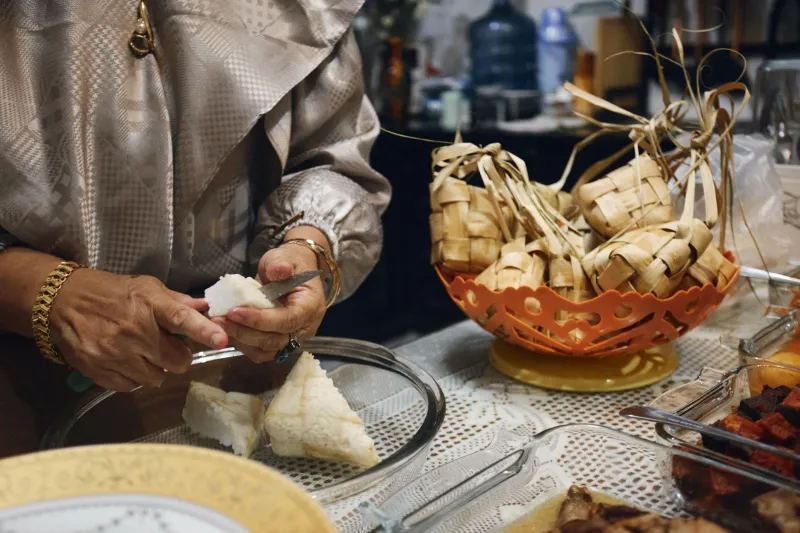
The first time Amira Zulkifli made her late grandmother's rendang from scratch in her Seattle apartment, she cried twice. Once when she couldn't find fresh galangal at any of the three Asian grocery stores she visited. And once — much later, after a trip to a specialty market in the International District finally yielded every last ingredient — when she took the first bite and it tasted, unmistakably, like being eight years old in Johor Bahru.
"That's the thing about cooking your heritage," she says, laughing a little at the memory. "It costs you something. And then it gives you everything back."
Amira is part of a loose but passionate community of Malaysian-Americans who are navigating something more complicated than a recipe. They're navigating memory, identity, family expectation, and the very real logistical challenge of sourcing ingredients that don't always have an obvious American equivalent. And increasingly, they're doing it not to open restaurants or launch food brands, but simply because the act of cooking their ancestors' food — the right way, the slow way, the way that actually matters — feels like one of the most important things they can do.
The Problem With 'Close Enough'
Anyone who's grown up eating authentic Malaysian cooking will tell you that substitutions have a ceiling. You can swap shrimp paste for a little fish sauce in a pinch. You can use dried galangal when fresh isn't available. But at some point, the shortcuts accumulate, and what you end up with is a dish that gestures toward Malaysia rather than actually arriving there.
For many Malaysian-American home cooks, that gap between "inspired by" and "the real thing" is exactly what they're working to close.
"There's a whole genre of 'Malaysian-ish' food online that drives me a little crazy," admits Daniel Lim, a second-generation Malaysian-American in Chicago who has spent the last three years methodically working through his mother's handwritten recipe notebooks. "It's not that those recipes are bad — some of them are genuinely good food. But they're not Malaysian food. And I think it matters to be honest about that difference."
Daniel's approach is almost anthropological. He video-calls his mother in Ipoh to clarify techniques, orders specialty ingredients through a small network of Malaysian grocery importers, and takes notes on what works and what doesn't with the focus of someone who understands that this knowledge won't always be a phone call away.
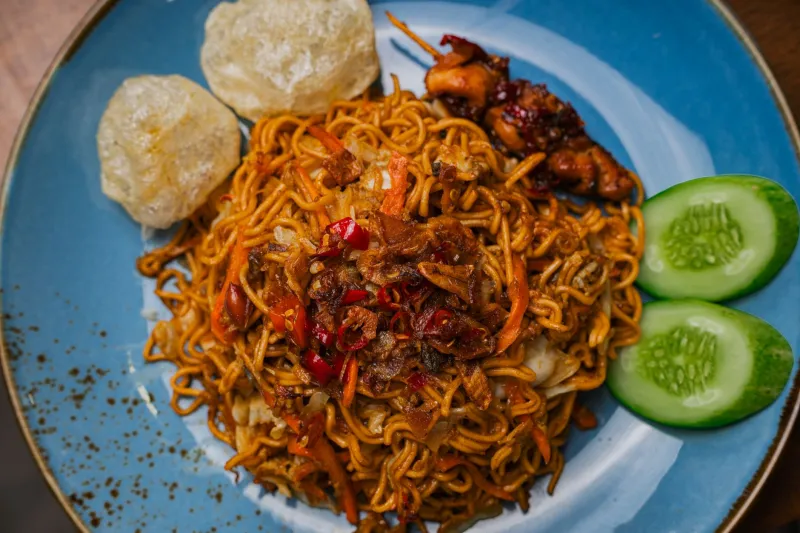
His current obsession is getting his nasi lemak sambal exactly right — specifically, the slow caramelization of onions and dried chilies that gives it that deep, slightly smoky sweetness. "My mom says her mom made it differently from the neighbor's mom, and both versions were 'correct.' That's the thing I love about Malaysian cooking. There's no single canonical version. It's regional, it's familial, it's personal."
What's Actually in the Pantry
One of the most common entry points for Malaysian-American home cooks is the pantry build — the slow, sometimes expensive process of stocking the ingredients that make authentic Malaysian cooking possible in an American kitchen.
The good news: access has genuinely improved. Large Asian grocery chains like 99 Ranch Market (concentrated on the West Coast but expanding) and H Mart carry a solid base of Malaysian staples — pandan leaves, lemongrass, belacan (fermented shrimp paste), dried chilies, and coconut milk are usually findable. Specialty Malaysian or Southeast Asian grocers in cities with larger diaspora communities — Houston, LA, the Bay Area, New York — go deeper, stocking items like bunga kantan (torch ginger flower), fresh turmeric, and various regional chili pastes.
For everything else, there's the internet. Several small importers now ship Malaysian pantry staples directly to American customers, and the Malaysian-American community on food forums and social media is remarkably generous with sourcing tips.
"Once you have the pantry, everything else is just time and technique," says Priya Nair, a Tamil Malaysian home cook in Atlanta who specializes in the Indian-influenced dishes of her heritage — curries, banana leaf rice, the complex spice work of a proper mutton varuval. "The time part is actually the point. These dishes take hours because they're supposed to take hours. That's where the flavor lives."
The Emotional Weight of the Plate
Cooking heritage food isn't just a culinary project. For many Malaysian-Americans, it's tied up in grief, love, obligation, and the particular ache of distance.
Amira's rendang project started after her grandmother passed away. She'd been too young, during her childhood visits to Malaysia, to learn the recipe properly — she'd watched, but not paid close enough attention. Reconstructing the dish from memory, from phone calls with aunties, from a dog-eared Malaysian cookbook she found at a used bookstore in Portland, became a way of staying connected to someone she'd lost.
"There's a version of grief where you cook," she says quietly. "You can't have the person back, but you can have the smell of the kitchen. You can have the taste. That's something."
For others, the emotional complexity runs in a different direction — toward the pressure of cooking for family members who remember the "real" version.
"The first time I made laksa for my parents, I was terrified," says Kevin Chong, a Malaysian-American food writer and home cook in San Francisco. "My mom grew up eating Penang laksa. She has opinions. Strong ones." He laughs. "She said it was good. She also said the asam (tamarind) balance was slightly off. Which is the highest compliment she knows how to give."
That intergenerational dynamic — the home cook trying to earn the approval of parents and grandparents who carry the original memory of a dish — is one of the defining features of this community. It's demanding. It's also, most cooks will tell you, deeply motivating.
Why This Matters Beyond the Kitchen
There's a larger cultural argument embedded in what these home cooks are doing, even if most of them wouldn't frame it that way themselves. At a moment when Malaysian food in America is most visible through restaurant fusion menus and social media "hacks," the insistence on cooking with integrity and ancestral fidelity is a quiet form of cultural resistance.
It says: this food has a context. It has a geography and a history and a set of techniques developed over generations. It deserves to be understood on its own terms, not just adapted for convenience.
It also says something about what home means when you're living between two cultures. For Malaysian-Americans, the kitchen is often the most vivid point of contact with a homeland many of them have visited only occasionally — or in some cases, never at all. Getting a dish right isn't just cooking. It's an act of belonging.
"Malaysia is in my food," Amira says. "Even when I can't be in Malaysia, I can cook my way back there. That's what my grandmother gave me. I'm not going to waste it."