More Than a Recipe: How Malaysian-American Families Are Passing Down Culture Through the Kitchen
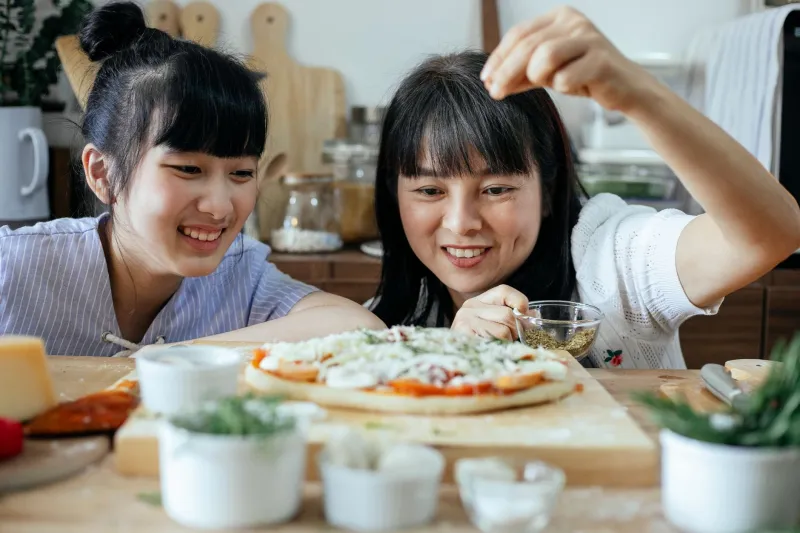
The first thing Siti Rahayu does when she pulls out her mother's rendang recipe isn't measure out the spices. It's tell her kids where each one comes from.
"Galangal is from my grandmother's garden in Negeri Sembilan," she tells her two daughters, aged nine and twelve, in their Austin, Texas kitchen on a Saturday morning. "Lemongrass grew wild near my school. When you smell these things together, you're smelling home — our home, even if you've never been there."
For Siti and thousands of Malaysian-American parents like her, the kitchen has become the most powerful classroom they have.
The Recipe Isn't the Point
There's a version of cultural food transmission that's purely practical: here's the recipe, here are the steps, don't burn the rempah. And that version matters. But what's happening in a growing number of Malaysian-American households goes significantly deeper.
These parents aren't just teaching technique. They're teaching context — the regional history behind a dish, the family story attached to a particular ingredient, the reason a certain kueh is made only at Hari Raya and not any other time of year. They're turning cooking into a form of storytelling, and the stove into a kind of archive.
"My kids can Google a rendang recipe in thirty seconds," says Hafiz Mohamad, a software engineer in the Bay Area who cooks with his eight-year-old son every weekend. "What they can't Google is why our rendang is drier than the restaurant version, because my mom's family from Pahang always cooked it until the coconut milk caramelized almost completely. That's not a recipe. That's a family fingerprint."
Spices as Stories
One of the most effective tools Malaysian-American parents are using is what you might call spice genealogy — tracing the origin and meaning of individual ingredients as a way of mapping family and regional identity.
Malaysian cuisine is, by its very nature, a story of migration and exchange. The cuisine reflects centuries of trade, movement, and cultural blending: Indian spice merchants bringing turmeric and cardamom, Chinese settlers introducing techniques and ingredients that fused with local Malay cooking, Nyonya (Peranakan) cuisine emerging from generations of intermarriage and culinary creativity. Every dish carries echoes of that history.
For Priya Krishnamurthy-Lim, a Tamil-Malaysian mom in New Jersey, cooking becomes a geography lesson as much as a culinary one. "When we make fish curry, I show my daughter on a map where the tamarind comes from, what the Tamil word for it is, why we use it instead of lime. We talk about why our family's version has coconut milk when some families don't use it. She's learning that food is never just food — it's a record of where people have been."
This approach, it turns out, is backed by research. Studies in cultural psychology suggest that children who understand the why behind family traditions — not just the what — are more likely to carry those traditions forward into adulthood and feel a stronger sense of cultural identity. The kitchen, with its sensory richness, its repetition, and its built-in emotional associations, is an unusually effective place for that kind of learning to happen.
Making It Stick for American-Born Kids
Of course, there are challenges. American-born kids have full lives — school, sports, screens, social lives — and not all of them are immediately enthusiastic about spending Saturday mornings grinding spice pastes by hand. The trick, parents say, is meeting kids where they are.
Siti has learned to let her daughters take ownership of specific parts of the cooking process. The older one is now in charge of the rempah — the spice paste that forms the flavor foundation of so many Malaysian dishes. The younger one handles the coconut milk. "When they have a job, they're invested. They want to know if they did it right. That's when the questions start coming."
Hafiz takes a slightly different approach, leaning into his son's love of facts and trivia. "I tell him that rendang was originally made to preserve meat before refrigerators existed — that the spices and the low moisture content kept it safe for weeks. His eyes go wide. Suddenly it's not just dinner, it's science and history."
For families making dishes like laksa — that glorious, complex, regionally-varied noodle soup that could fill an entire culinary PhD thesis on its own — the variation between versions becomes a teaching moment. Penang laksa is sour and fish-forward. Sarawak laksa is rich with coconut and sambal. Curry laksa is creamy and fragrant. Walking kids through those differences, and explaining how geography and local ingredients shaped each version, makes the dish feel alive rather than static.
Kueh and the Calendar of Memory
Perhaps nowhere is the cultural weight of Malaysian cooking more concentrated than in its kueh — the category of traditional sweets and snacks that could fill an entire book on their own. Pandan-scented kueh dadar. The jewel-bright layers of kueh lapis. Ondeh-ondeh with their molten palm sugar centers.
These aren't just snacks. They're seasonal markers, celebration foods, memory triggers. And for Malaysian-American families, making them by hand — rather than buying them at an Asian grocery store, if they're lucky enough to have one nearby — is an act of cultural preservation that feels urgent.
"My mom made kueh lapis for every big occasion," says Rohani Abdullah, who now lives in Chicago. "When I make it with my kids, I tell them about those occasions. I tell them about my grandmother, who taught my mom, who taught me. My daughter is eight. She doesn't fully understand yet. But she will remember the smell, and one day she'll make it for her kids and remember this kitchen too."
That's the thing about food memory: it's remarkably durable. The smell of toasted coconut, the color of pandan, the specific sweetness of gula melaka — these sensory anchors have a way of persisting across decades and distances in a way that textbooks and family albums sometimes can't match.
Starting Your Own Kitchen Tradition
You don't have to be Malaysian to take something from this approach. Whether you're a Malaysian-American parent looking for a framework to start these conversations, or someone from an entirely different background who wants to connect their kids to their own culinary roots, the principles are the same.
Start with one dish that has a family story attached to it. Not just the recipe — the story. Where did it come from? Who made it? What was it made for? Let your kids hold the ingredients, smell them, ask questions. Let the cooking be slow and conversational rather than efficient.
And if you're Malaysian-American and you've been putting off these kitchen sessions because life is busy and the recipes feel complicated — start small. A pot of teh tarik. A batch of ondeh-ondeh. The dish matters less than the conversation that happens around it.
Because what you're really cooking, in those moments, is something that no recipe can fully capture: a sense of where your family comes from, and who your kids are becoming.