Every Day Is a Celebration: How Malaysian-American Families Keep Their Roots Alive Between the Big Holidays
Ask most Malaysian-Americans when they feel most connected to home, and you might expect answers about Hari Raya open houses, Chinese New Year reunion dinners, or Deepavali celebrations with extended family. And sure — those moments matter enormously. But spend enough time talking to families across the US, and a different, quieter kind of answer keeps surfacing.
It's the smell of pandan wafting through a Houston kitchen on a Saturday morning. It's a WhatsApp voice note from a grandmother in Penang, played on speaker while a family eats dinner in New Jersey. It's a mom in Seattle who insists on calling her kids to the table with 'Jom makan!' even though English is the household's dominant language now.
The big celebrations are the headline acts. But the everyday rituals? Those are what actually hold a culture together across thousands of miles.
When the Calendar Isn't Enough
The challenge for any diaspora community is that cultural identity can start to feel event-dependent. You're 'Malaysian' at the festival, at the cultural association potluck, at the annual gathering — and then life resumes its American rhythm and the connection fades a little until the next occasion rolls around.
For many Malaysian-American families, especially those raising children who were born here, that feast-or-famine approach started to feel insufficient. Kids who only encounter their heritage during formal celebrations can come to see it as something separate from their real lives — a costume you put on rather than a skin you live in.
So families started getting intentional about the in-between.
The Weekly Table as Cultural Anchor
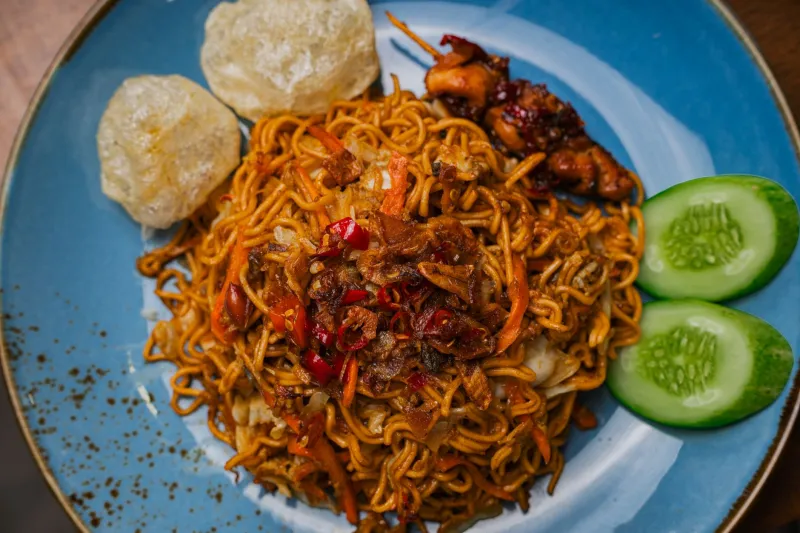
Food is, without question, the most common everyday ritual Malaysian-Americans point to. And it makes complete sense — Malaysian cuisine is one of the world's great culinary traditions, and it's deeply regional, deeply personal, and deeply tied to memory.
For families from Penang, that might mean a weekly pot of assam laksa, the sour, tamarind-laced noodle soup that tastes like a specific street corner in Georgetown. For Kelantanese families, it's nasi kerabu — that striking blue-tinged rice that always draws questions from American neighbors — served on Friday evenings as a nod to the week's end. Families with roots in KL might rotate through char kway teow, roti canai, or a slow-cooked rendang that fills the whole house.
These aren't just meals. They're weekly geography lessons, flavor memories, and a standing invitation for kids to ask 'Why do we make this?' — which opens doors to conversations about family history, regional identity, and what home actually means.
The recipes themselves become heirlooms. Several families mentioned keeping handwritten cards with their parents' or grandparents' measurements — not cups and tablespoons, but 'enough coconut milk until it looks right' and 'stir until you can smell it changing.' Learning to cook Malaysian food is, for many second-generation kids, one of the most direct ways they've accessed their own heritage.
Morning Rituals That Cross Oceans
Beyond the dinner table, Malaysian-American families have woven cultural touchpoints into the quieter hours of the day. Morning routines, in particular, have become surprisingly rich sites of cultural practice.
Some families maintain the Malaysian habit of a proper cooked breakfast — a carryover from a culture that has never really embraced the American grab-and-go granola bar tradition. Kaya toast with soft-boiled eggs and teh tarik on Sunday mornings is a ritual several families described with near-reverence. It's slow, it's communal, and it's unmistakably Malaysian in a way that a bowl of cereal simply can't be.
Language sneaks in through the morning, too. Parents who've made peace with the fact that their kids default to English still find ways to keep Malay, Mandarin, Tamil, or Hokkien present. A greeting in the mother tongue. A joke that only works in the original language. A word that doesn't have a clean English translation — lepak, syiok, cincai — that gets used anyway because nothing else quite fits.
Weekend Gatherings: The 'Unofficial' Community
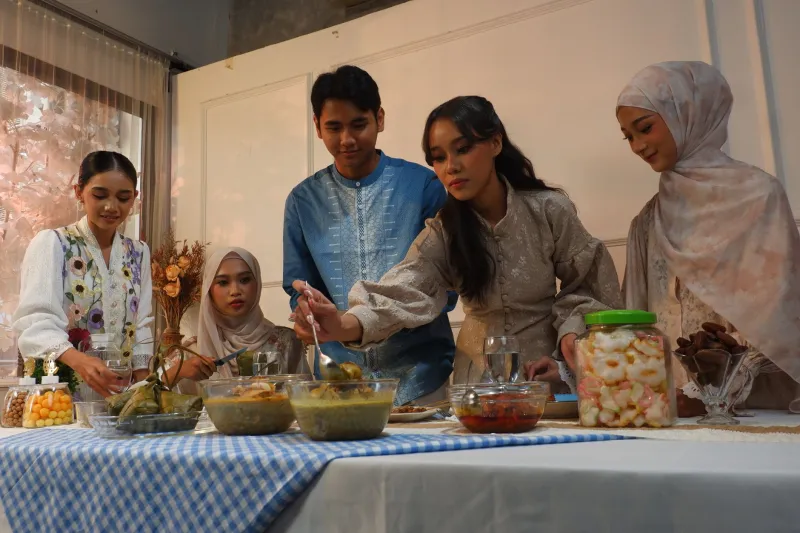
Beyond the immediate family, many Malaysian-Americans have built informal community networks that meet far more regularly than any official cultural organization. These are the weekend WhatsApp group meetups, the backyard barbecues where someone always brings satay and someone else brings a pot of curry, the informal potlucks where the unspoken rule is: bring something Malaysian.
These gatherings serve a function that formal cultural events sometimes can't — they're low-stakes, recurring, and genuinely social. Kids run around together. Adults swap tips on where to find belacan in their city. Someone's auntie visiting from KL ends up at the center of the gathering, and suddenly the diaspora has a direct line to home for an afternoon.
The consistency is the point. It's not a once-a-year performance of Malaysian identity — it's a living, evolving community that meets often enough to feel like a real part of everyday American life.
Small Moments, Deep Roots
What strikes you, listening to these families, is how unflashy most of these rituals are. Nobody's building a cultural monument. They're making soup. They're teaching a kid to say terima kasih before they learn to say 'thank you.' They're keeping a grandmother's recipe card in a kitchen drawer in Ohio.
But that's exactly the point. Culture doesn't survive through grand gestures alone. It survives through repetition, through the ordinary made meaningful, through the decision — made quietly, every single week — to bring a little bit of Malaysia to the table.
For Malaysian-American families across the US, home isn't always a place you can fly back to. Sometimes it's just Tuesday night, a pot on the stove, and the particular smell of lemongrass that makes everyone in the house stop for a second and feel exactly where they come from.