What Happens When You Stop Filling the Silence: The Malaysian Secret to Deeper Conversations

Picture this: you're at a backyard barbecue in suburban Ohio, and someone you just met asks what you do for a living, where you went to school, whether you own or rent, and how you feel about the local sports team — all before you've finished your first plate. It's friendly. It's well-meaning. And for a lot of Malaysian-Americans, it's quietly exhausting.
Because back home — or in the homes their parents built here in the States — conversations work a little differently.
The Pause That Says Everything
In many Malaysian social settings, silence between people isn't a gap to be filled. It's a signal of trust. It means you're comfortable enough with someone that you don't need noise to hold the relationship together.
Nurul Ain Hashim, a 34-year-old graphic designer who moved from Kuala Lumpur to Seattle eight years ago, describes it this way: "When I sit with my aunties back home, we can go twenty minutes without saying much and it doesn't feel weird at all. We're just there together. The first time I tried that with American friends, they asked if I was upset about something."
This isn't a uniquely Malaysian phenomenon — many East and Southeast Asian cultures share similar values around silence — but the Malaysian version has its own particular flavor, shaped by a blend of Malay, Chinese, Indian, and indigenous influences that have been layering together for centuries. The result is a communication culture that prizes what linguists sometimes call high-context communication: a style where meaning is carried as much by what isn't said as by what is.
Reading the Room, Not the Script
American communication tends to be what researchers classify as low-context: explicit, direct, and verbal. Say what you mean, mean what you say. It's efficient, and in professional settings especially, it has real advantages.
But Malaysian conversational culture operates on a different frequency. There's a concept embedded in Malay social life sometimes described as rasa — a felt sense of emotional attunement, an awareness of how the other person is doing that doesn't require them to announce it out loud. You notice. You adjust. You might offer more food, change the subject gently, or simply sit closer without saying a word.
Dr. James Ooi, a Malaysian-American cultural psychologist based in Los Angeles, has spent years studying how these communication differences play out in immigrant communities. "What I see a lot," he says, "is that Malaysian-Americans — especially first-generation folks — feel a kind of low-grade social fatigue in American settings. Not because Americans are unfriendly. They're often incredibly warm. But the expectation to perform extroversion constantly, to always have a funny story or a hot take, can feel like work rather than connection."
He points out that the irony is rich: a culture that talks less often communicates more meaningfully. "When you're not obligated to fill every moment, the things you do say carry more weight. People actually listen."
Small Talk vs. Slow Talk
There's nothing wrong with American small talk — it serves a real social function, smoothing over the initial awkwardness between strangers and signaling friendliness. But it can also stay shallow for a very long time. The same three questions (What do you do? Where are you from? Do you have kids?) get recycled endlessly, creating the illusion of connection without much of the substance.
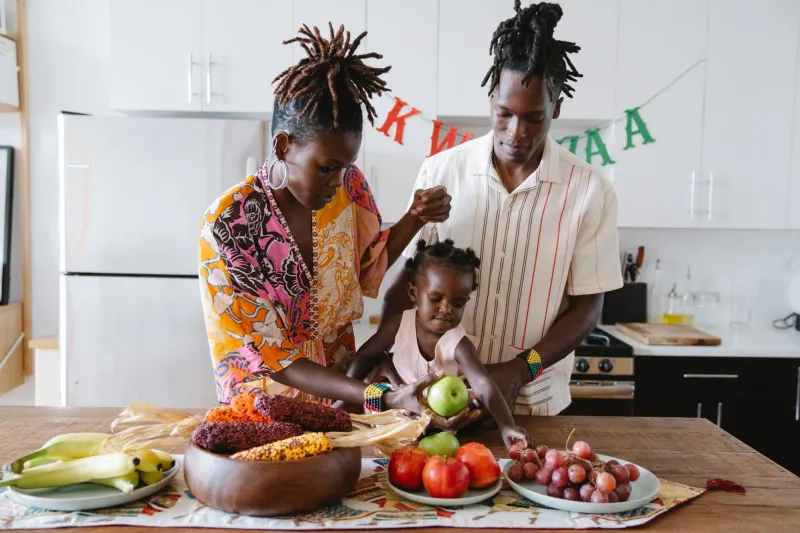
Malaysian social gatherings, particularly among older generations, tend to move more slowly. Conversations meander. Someone might bring up a memory from twenty years ago. There are long stretches of just eating together, watching the kids run around, or sitting on the porch watching the evening come in. Nobody's keeping score of who said the cleverest thing.
Fatimah Zulkifli, who runs a popular Malaysian home-cooking account out of Houston, says that when she hosts dinners for her American neighbors, the vibe shift is noticeable. "I don't rush people. We eat slowly. I refill tea without asking. By the end of the night, people have told me things they probably didn't plan to say. I think it's because there's no pressure."
That low-pressure environment, she believes, is itself a form of hospitality — something that overlaps with the Malaysian concept of sambut tetamu, or the art of receiving guests with genuine warmth rather than performative energy.
What This Means for Your Relationships
For Malaysian-Americans navigating friendships and workplaces built on American communication norms, there's often a quiet negotiation happening. Do you adapt entirely? Do you hold onto your own style and risk being misread as aloof or disengaged?
Many find a middle path. Nurul Ain has started being upfront with close friends: "I told my best friend here, 'If I go quiet, I'm not mad — I'm just comfortable.' And she got it. Now she actually loves it. She says it's the most relaxing friendship she has."
In professional settings, Dr. Ooi suggests that the Malaysian tendency toward thoughtful pausing before responding — rather than immediately jumping in — can actually read as confidence and deliberateness to those who understand it. "The challenge is that in fast-paced meetings, you can get talked over. But one-on-one, or in smaller groups, taking a beat before you speak often earns you more respect, not less."
Bringing the Quiet Home
If any of this resonates with you — Malaysian or not — there are small, practical ways to invite more of this energy into your everyday life.
Try eating a meal with your family or a close friend without background noise. No TV, no podcast, no scrolling. Just the food and the company. Notice what comes up in the space.
When someone shares something with you, resist the urge to immediately respond with your own story. Sit with what they said for a moment. Ask a follow-up question instead.
And the next time a silence falls in a conversation you're having with someone you trust, try not to rush to fill it. See what happens. You might be surprised how much is communicated in that quiet — how much closer you feel to someone when you're simply present together, without the noise.
Malaysian culture has been practicing this for generations. It turns out the rest of the world might be ready to catch up.