More Than Money: How the Malaysian Art of Berbagi Is Quietly Healing Lonely American Neighborhoods
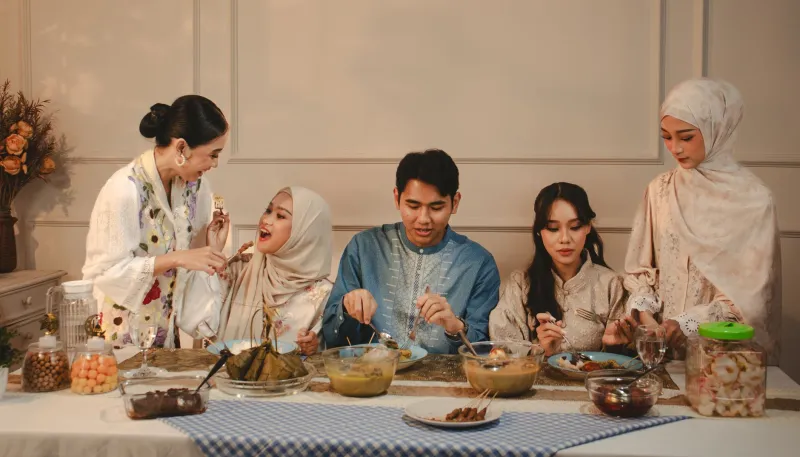
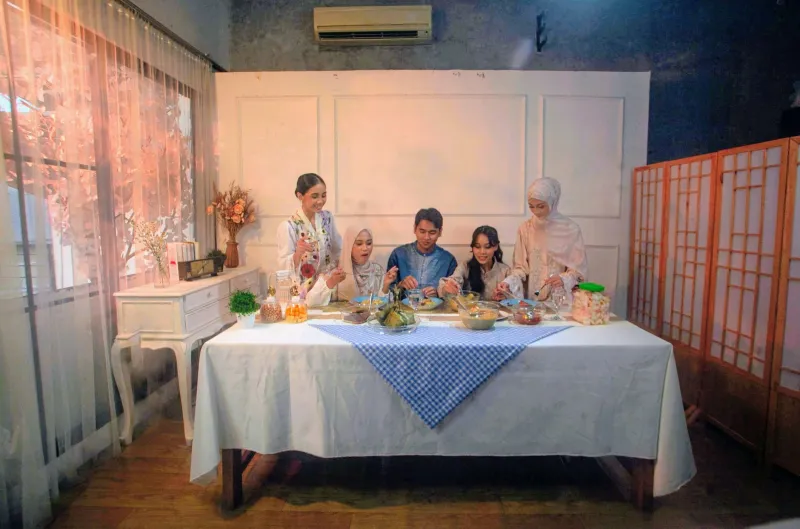
Somewhere in a suburb outside of Atlanta, a Malaysian-American woman named Suraya sets out a pot of nasi lemak every Saturday morning. Not for a party. Not for a special occasion. Just because her neighbor mentioned once that she was learning to cook Southeast Asian food, and Suraya thought — well, why not show her in person?
That's berbagi. And it's way more powerful than it sounds.
So What Exactly Is Berbagi?
The word itself comes from Malay, and at its most basic, it just means "sharing." But that translation doesn't really do it justice. In Malaysian culture, berbagi isn't a transaction. It's not the kind of sharing where you're keeping score or waiting to be paid back. It's the impulse to offer what you have — your food, your knowledge, your afternoon, your tools, your connections — because someone near you could use it.
Think of it less like a favor economy and more like a constant, low-key flow of generosity that holds a community together. In Malaysia, this shows up everywhere: in the way neighbors leave extra fruit from their garden at the front gate, in the informal skill-swaps between families, in the way someone who knows how to fix a motorbike just... fixes your motorbike, because you're neighbors and that's what neighbors do.
It's communal living without the commune. And it turns out, Americans are quietly starving for exactly this.
The Loneliness Problem Nobody Wants to Talk About
The U.S. Surgeon General made headlines a couple of years ago when he declared loneliness a public health epidemic. Nearly half of American adults report measurable feelings of isolation. Neighborhoods that were once full of front-porch conversations and borrowed cups of sugar have given way to garage-door cultures where you can live next to someone for five years and never learn their last name.
We've built systems to replace community — apps for grocery delivery, platforms for freelance services, subscriptions for everything. But convenience, it turns out, is not the same as connection. And the more we outsource the small acts of mutual reliance that used to bind people together, the lonelier things get.
This is where berbagi comes in. Not as a nostalgic fantasy, but as a genuinely practical framework for rebuilding what's been lost.
What a Berbagi Circle Actually Looks Like
Rosnah, a Malaysian immigrant living in the Pacific Northwest, started what she calls a "sharing circle" in her neighborhood about three years ago. It began small — a group text with five families, mostly South and Southeast Asian immigrants, where people could post what they had too much of or what they needed help with.
"At first it was just food," she laughs. "Someone has too many mangoes from the Asian grocery, someone else needs eggs. Very simple." But it grew. One member, a former schoolteacher, started offering Bahasa Malaysia lessons to the kids in the group. Another, a retired contractor, helped two families with small home repairs. Rosnah herself taught a sewing workshop in her living room.
What started as a practical resource swap became something harder to name — a sense of genuine belonging that none of them had quite found in their American neighborhoods before.
"In Malaysia, this is just normal," Rosnah says. "You don't think about it. Here, people are surprised. They say, 'Why are you doing this? What do you want?' And I say, nothing. I just want us to know each other."
The Transactional Mindset and Why It's So Hard to Shake
Here's the uncomfortable truth: American culture has spent decades training us to be suspicious of free generosity. If someone offers something without an obvious angle, we get nervous. We ask what they want. We assume there's a catch.
This isn't a character flaw — it's a cultural reflex, shaped by a society built on contracts, individual property rights, and the idea that self-sufficiency is a virtue. Asking for help can feel like weakness. Offering it unsolicited can feel like overstepping.
Berbagi challenges all of that. It asks you to sit with the discomfort of receiving something without immediately balancing the ledger. It asks you to offer something without knowing if you'll ever get anything back. It asks you to trust that the community will hold you, even when you can't see exactly how.
For Malaysian immigrants, this isn't idealism. It's just how things worked back home. The challenge — and the gift — is translating it into a context where those instincts have been systematically trained out of people.
Small Acts, Big Shifts
You don't need to launch a formal sharing circle to start practicing berbagi. Some of the most meaningful versions of it are almost invisible.
Faridah, a Malaysian-American living in Chicago, bakes extra every time she cooks. "My mother always made more than we needed. Always. I thought it was just her personality, but now I understand — it was intentional. If you always have extra, you always have something to give."
She leaves portions on her building's shared counter with a sticky note. She texts her elderly neighbor when she's heading to the halal market. She keeps a mental note of who in her circle is good at what — taxes, car stuff, emotional support after a bad day — and connects people when she sees a need.
"It's not a big thing," she says. "It's just paying attention. And offering before someone has to ask."
That last part is key. In Malaysian berbagi culture, waiting for someone to ask for help is almost beside the point. You notice. You offer. You don't make it a big deal.
What Americans Can Actually Take From This
The beauty of berbagi is that it scales to wherever you are. You don't need a village or even a particularly close neighborhood. You need a willingness to share something real — not a curated Instagram version of generosity, but the actual, slightly-inconvenient, genuinely-human kind.
Share a skill you have with someone who needs it. Bring food to a neighbor without a reason. Offer your afternoon to help someone move, fix something, or just sit with them while they figure out a problem. Let people help you, too — because berbagi only works when it flows both ways.
Suraya, back in Atlanta, has watched her Saturday nasi lemak ritual turn into something she never quite planned for. Her neighbor started bringing her own dish a few weeks in. Then a third neighbor started stopping by. Now there are six of them, from four different countries, crowded into Suraya's kitchen every weekend.
"I didn't set out to build community," she says. "I just shared what I had. But that's always how it starts, isn't it?"
Maybe the antidote to American loneliness isn't a new app or a neighborhood association meeting. Maybe it's something much older, and much simpler — the quiet, radical act of offering what you have, just because someone near you could use it.