Being There, For Real: What the Malaysian Idea of 'Hadir' Can Teach Us About Presence in a World of Notifications

Somewhere between your third Zoom call of the day and the moment you realized you'd scrolled through dinner without tasting a single bite, something got lost. You were there — technically. Your name was on the meeting invite. Your chair was pulled up to the table. But were you actually present? If you're being honest, probably not.
This is the quiet crisis of modern American life. We're more connected than any generation in history, and somehow, we've never felt more absent from the moments that actually matter.
The Malay word hadir translates simply as "present" or "attendance." But inside Malaysian culture, it carries a weight that the English word doesn't quite hold. Being hadir isn't a checkbox. It's a commitment — to the room, to the people in it, to the conversation unfolding in real time. And for a growing number of Malaysians living in the United States, holding onto that value has become one of the most meaningful ways they stay connected to who they are.
More Than a Body in the Room
Nor Azlina Hassan moved from Kuala Lumpur to Minneapolis eight years ago for graduate school and never quite left. She works in healthcare administration now, and she'll tell you plainly that the thing she's had to fight hardest to preserve isn't her language or her food — it's her attention.
"Back home, when you sit with someone, you sit with them," she says. "You're not half somewhere else. There's this expectation, especially with elders or at family gatherings, that your presence is a gift you're giving. You don't give half a gift."
In practice, that means phones face-down at meals. It means making eye contact during conversations instead of glancing at the corner of a screen. It means resisting the pull to document an experience on Instagram before you've actually had the experience.
"I notice that a lot of my American friends feel guilty about it, honestly," Nor Azlina adds. "Like they know they're distracted but they don't know how to stop. I think hadir gives it a name. And sometimes naming something is the first step to reclaiming it."
The Performance of Showing Up
Here's the uncomfortable truth about American social culture right now: we've gotten very good at the appearance of presence without the substance of it. We post photos from gatherings to prove we were there. We reply "I'm listening" in meetings while typing emails. We send flower emojis on birthdays instead of calling. We've built entire social rituals around demonstrating attendance rather than actually giving it.
Psychologists have a term for this — phubbing, the act of snubbing someone in favor of your phone. Studies from Baylor University found that partner phone snubbing significantly increases conflict and decreases relationship satisfaction. We know it's a problem. We just haven't found a compelling enough reason to stop.
Maybe that reason is hadir.
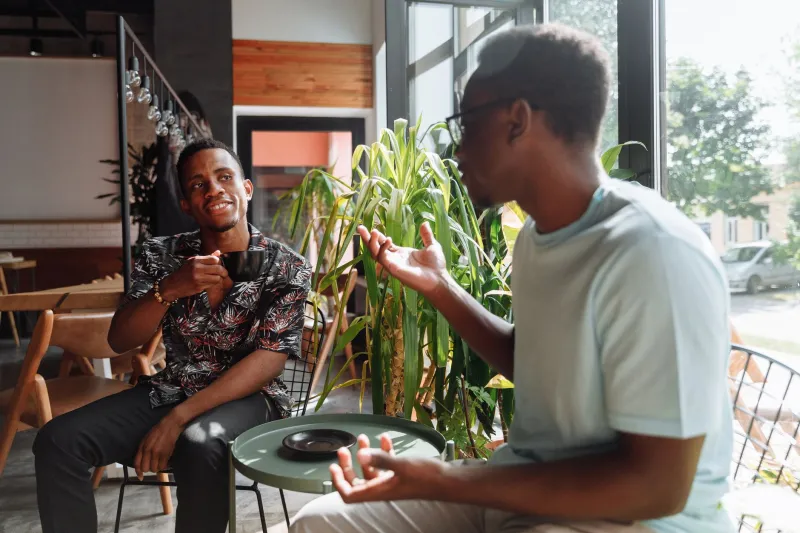
Farouk Idris, who came to Austin from Penang in 2015 and now runs a small architecture firm, describes it as a cultural muscle. "In Malaysia, you're trained from childhood that being present is a form of respect. If your uncle is talking, you listen. Not just with your ears — with your body, your eyes, your energy. It's almost like a physical thing, the attention you give someone."
He pauses. "In America, I had to consciously keep exercising that muscle. Because everything here is designed to make you distracted."
What Hadir Looks Like at Work
It's not just personal relationships where this shows up. Farouk says the concept has quietly shaped how he runs his team.
"We have a rule in our meetings — no laptops unless you're presenting something. People thought it was weird at first. But after a few months, the quality of our conversations changed completely. People started actually listening to each other. Ideas got better. Conflicts got resolved faster because people felt heard."
This tracks with research from MIT and Harvard Business School suggesting that even the presence of a phone on a table — face-down, silent — reduces the quality of conversation between two people. Our brains know the device is there. We're half-waiting for it.
Removing the device isn't just a courtesy. It's a cognitive reset.
"I didn't think of it as a management strategy," Farouk laughs. "I just thought of it as how you treat people. You give them your full attention. That's hadir."
Presence as an Act of Belonging
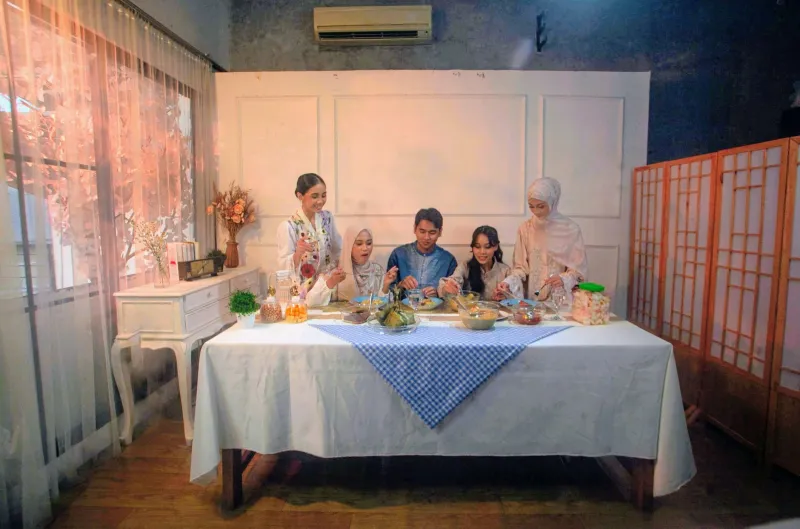
For Malaysian-American families, hadir also carries a particular kind of weight during cultural gatherings — Hari Raya celebrations, kenduri feasts, community events at the local surau or cultural center. These aren't just parties. They're the threads that keep a diaspora stitched together across thousands of miles from home.
Siti Rahimah Yusof, who organizes a Malaysian community group in the San Francisco Bay Area, says that full presence at these events is almost sacred. "When someone comes to our gathering and they're really there — not on their phone, not half-distracted — you feel it. It matters. It tells everyone in the room: I value this. I value us."
She's seen younger Malaysian-Americans wrestle with this. Born or raised in the US, they're navigating two cultural speeds — the slow, deliberate presence that their parents modeled, and the rapid-fire, always-on rhythm of American social life.
"I tell the younger ones: you don't have to choose one or the other. But at least know what you're doing. If you're on your phone at a family gathering, know that you're making a choice. And then ask yourself if it's the choice you actually want to make."
Small Practices, Real Shifts
You don't need to move to Malaysia to start practicing hadir. You don't even need to overhaul your entire relationship with technology. The shift, as Nor Azlina sees it, is less about restriction and more about intention.
Leave your phone in your bag during dinner — not on the table, in your bag. When a friend is talking, resist the urge to formulate your response while they're still mid-sentence. Show up to events a few minutes early instead of sliding in late and half-breathless. When you're with your kids, be with your kids — not supervising them from behind a screen.
These are small things. But they accumulate into something significant: a life that actually feels inhabited.
"Americans are so hungry for this," Nor Azlina says. "I see it everywhere. People are tired of feeling like they're missing their own lives. They just need permission, maybe, or a framework. Hadir is that framework."
In a culture that rewards busyness and celebrates multitasking, choosing to be fully present is almost a countercultural act. But it's one that Malaysians have been practicing for generations — not as a wellness trend or a digital detox challenge, but as a simple expression of care.
To be hadir is to say: you matter enough to have all of me. Not half of me. Not the distracted, screen-glazed version of me. All of me, right here, right now.
And honestly? That might be the most radical thing any of us can offer each other these days.