Blessed, Not Bought: The Malaysian Secret to Raising Kids Who Don't Need More Stuff
Here's a question worth sitting with: when was the last time you felt genuinely abundant?
Not rich. Not minimalist. Not decluttered. Abundant — that warm, full-chest feeling that what you have is exactly what you need, and somehow it's more than enough.
For a lot of Malaysian families, that feeling has a name. It's called berkah. And it's been quietly shaping how generations of Malaysians — and now Malaysian-Americans raising kids in the US — think about money, celebration, gratitude, and the whole messy business of being alive.
So What Is Berkah, Exactly?
Berkah (sometimes spelled berkat) is an Arabic-rooted word that's been woven so deeply into Malaysian culture it no longer feels borrowed — it just is. Loosely translated, it means blessing. But that translation does it a disservice.
In Malaysian daily life, berkah isn't just something you receive from above. It's something you participate in creating. It lives in the intention behind your actions, the gratitude you carry into ordinary moments, and the way you share what you have — even when what you have isn't much.
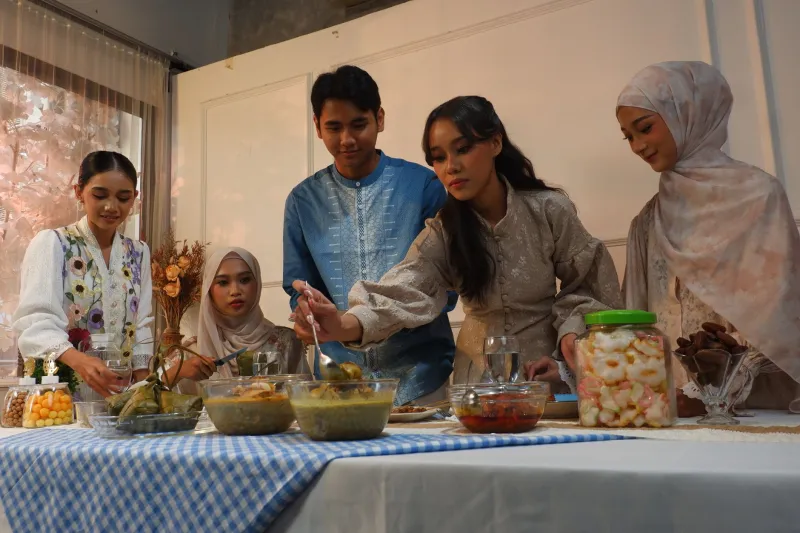
When a Malaysian family prepares a pot of nasi lemak to share with neighbors, that's berkah in motion. When an elder says a quiet prayer before a meal, when a parent wraps a modest gift with genuine care, when a household runs on less but feels like more — that's berkah too.
It's not a productivity hack. It's not a lifestyle brand. It's a worldview.
Why Western Minimalism Misses the Point
Over the past decade, minimalism has had a serious moment in American culture. The capsule wardrobe. The 100-thing challenge. The perfectly photographed empty shelf. The message, broadly, is that less is more — and if you just get rid of enough stuff, you'll find peace.
There's nothing wrong with owning less. But berkah would gently push back on the framing.
Western minimalism, at its core, is still a transaction. You give something up, and you get clarity in return. The math is about subtraction. And honestly? It can still be pretty self-focused — a personal optimization project dressed in linen.
Berkah isn't about subtraction. It's about orientation. You don't need to own less; you need to be more present with what you already have. You don't need to curate your possessions; you need to be grateful for them. The abundance isn't hiding underneath the clutter — it's already here, if you're paying the right kind of attention.
That's a fundamentally different starting point. And for Malaysian-American families trying to raise kids in a culture that's constantly telling them they need the next thing, it's a surprisingly powerful one.
Raising Berkah Kids in an Amazon Household
Let's be honest: parenting in America means swimming upstream against a relentless current of want. Birthday parties with elaborate themes. Holiday gift lists that start in October. The low-grade pressure to give your kids everything your parents couldn't give you.
Malaysian-American parents navigating this terrain often describe reaching back to berkah — not as a rule, but as a compass.
One mother in the Atlanta area described it this way: her kids don't get everything they ask for, but they're never made to feel like they're missing out. Instead, her family has built rituals around what they have — Friday night dinners where everyone contributes something, small celebrations of ordinary wins, a habit of saying thank you out loud before meals in a way that actually means something.
"My mom used to say that a house with berkah always has enough to share," she said. "I didn't understand that as a kid. Now I think about it constantly."
That instinct — to share even modest resources, to mark small moments with intention — is berkah in practice. And research increasingly backs up what Malaysian families have known for generations: kids who grow up in gratitude-oriented households tend to be more resilient, more socially connected, and less prone to the anxiety that comes from chasing a moving target of enough.
The Rituals That Make It Real
Berkah isn't a philosophy you hang on the wall. It lives in the small, repeated gestures of daily life. Here are a few ways Malaysian families tend to bring it into their homes — and how you can too, regardless of your background.
Start meals with intention. It doesn't have to be religious. It can be as simple as naming one thing you're grateful for before you eat. In many Malaysian households, this is second nature — a beat of acknowledgment before the food disappears. It reorients the whole table.
Celebrate the ordinary. Berkah shows up in the small feasts: the plate of fruit set out for no reason except that someone came home, the extra portion saved for a neighbor, the snack that becomes a moment. You don't need a birthday to make something feel special.
Give from what you have, not what you wish you had. Malaysian gift-giving culture isn't about price tags — it's about thoughtfulness and presence. A homemade dish, a handwritten note, time spent together. Kids raised in this tradition learn early that generosity isn't a function of wealth.
Name the blessings out loud. There's something quietly powerful about saying, in plain language, "we have enough." Not as a consolation, but as a genuine recognition. Malaysian elders do this constantly — a running acknowledgment of small mercies. It sounds simple because it is. It works because it's true.
Resist the upgrade reflex. The question berkah asks isn't "what could be better?" but "what is already good?" Before replacing something, before buying the newer version, before assuming the next thing will feel different — pause. That pause is where berkah lives.
A Different Kind of Wealth
American culture is exceptionally good at creating desire. It's less practiced at creating satisfaction. That gap — between wanting and having, between acquiring and feeling full — is exactly where berkah does its quiet work.
For Malaysian-American families, this philosophy isn't a rejection of American life. It's a way of moving through it with something intact. A way of raising kids who can want things without being ruled by wanting. A way of building a home that feels rich without necessarily being expensive.
Berkah doesn't promise you more. It promises you enough — and then gently shows you that enough was always more than you thought.
That's not minimalism. That's something older, warmer, and a whole lot harder to put on a shelf.