When Silence Speaks Loudest: The Malaysian Art of Writing Love Across an Ocean

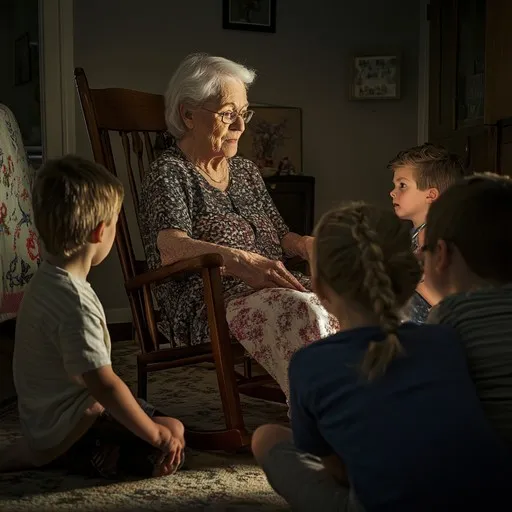
Photo by Photo by Ire Photocreative on Unsplash on Unsplash
There's a folded piece of paper sitting in Nurul Ain Hashim's kitchen drawer in Portland, Oregon. It's been there for three years. The edges are soft from handling, the ink slightly faded in the crease lines. It's a letter from her mother in Penang—two pages, handwritten in a looping mix of Malay and English, sent the month after Nurul got married. She doesn't read it often. She doesn't need to. She already knows every word.
"My mom isn't someone who says 'I love you' out loud," Nurul explains, laughing a little. "That's just not how she was raised. But that letter—she wrote things in there she would never say to my face. I think she needed the distance of paper to do it."
This is a familiar dynamic in many Malaysian families, both at home and in the diaspora scattered across the United States. Communication, especially emotional communication, often operates on a different frequency than what most Americans are used to. It's not cold or withholding. It's deliberate. It's layered. And increasingly, Malaysian-Americans are finding that this particular cultural rhythm—the art of saying everything without saying too much—is something worth holding onto.
What Gets Left Unsaid (On Purpose)
In Malaysian culture, restraint in communication isn't a flaw. It's a form of respect. There's a long tradition of berbudi bahasa—literally, "the language of good character"—which shapes how people speak to one another, especially across generational lines. Directness, particularly around deep emotion, can feel intrusive. What you choose not to say often signals how carefully you've considered the other person's dignity.
For families separated by oceans, this creates an interesting tension. Modern technology makes it possible to be in near-constant contact—video calls, voice notes, WhatsApp threads that never sleep. And yet many Malaysian-American families find that the most nourishing exchanges aren't the daily check-ins. They're the occasional, considered messages. The voice note recorded on a quiet Sunday morning. The postcard slipped into an envelope with a pressed flower. The long email written over three days and edited twice before sending.
Azri Zulkifli, a software engineer based in Austin, grew up watching his grandmother in Kelantan write letters to relatives who had moved to Kuala Lumpur. She'd sit at the kitchen table after dinner, pen in hand, sometimes for an hour. "She treated it like a ceremony," he says. "She'd think about what she wanted to say before she wrote a single word. I didn't appreciate that as a kid. Now I do it myself."
Azri writes actual letters. Not emails. Letters. He mails them to his parents in Malaysia every few weeks, sometimes enclosing a photo printed at the drugstore. "They could FaceTime me anytime. But when a letter arrives, my mom tells me she reads it to my dad at the dinner table. That's a whole different thing."
The Weight of a Voice Note
Not every family reaches for pen and paper, of course. For many Malaysian-Americans, the voice message has become its own intimate ritual—something richer than a text, more considered than a phone call.
Fatimah Roslan, a nurse in Chicago, sends her aunt in Johor Bahru a voice note every Sunday evening. They rarely call in real time anymore. "Time zones are hard, and honestly, I don't always have the energy to perform a whole phone call," she admits. "But a voice note—I can record it at 10pm, she listens to it with her morning coffee. It's like we're sitting together but separately."
What Fatimah describes—being together but separately—captures something essential about long-distance love in Malaysian families. Physical distance is a given for the diaspora. Emotional closeness, though, is something you architect deliberately. And the tools matter less than the intention behind them.
Her aunt, she says, sometimes replies with a voice note that's mostly ambient sound. The kitchen in the morning. The call to prayer drifting through an open window. "She'll say a few words and then just... let me hear the house. I cry every time."
Small Rituals, Big Meaning
Beyond letters and voice notes, Malaysian families often maintain connection through tiny, recurring rituals that might look unremarkable from the outside. A recipe sent in a text message—not as a cooking tutorial, but as a way of saying I thought of you. A photo of a meal that looks like something Grandma used to make. A song link. A newspaper clipping photographed and sent without comment.
These micro-gestures are deeply embedded in how Malaysian families express care. They're not grand declarations. They're steady, quiet proof that someone is holding you in their thoughts.
Raihan Mokhtar, who grew up in Kuala Lumpur and now lives in Seattle with her husband and two kids, has a shared photo album with her mother that they both add to silently. No captions. Just images—a sunset, a child's drawing, a plate of nasi lemak made on a Saturday. "We don't always comment on each other's photos," Raihan says. "But we both know the other one is looking. That's enough."
For her American friends, this is sometimes baffling. Aren't you supposed to say something? Respond? Engage? But Raihan shakes her head. "Not everything needs a reaction. Sometimes the point is just to witness."
What American Families Can Borrow
In a culture that prizes constant connectivity, oversharing, and the performance of closeness—think public declarations of love, the endless scroll of family group chats—the Malaysian approach to long-distance intimacy offers a genuinely countercultural model.
It asks you to slow down. To think before you type. To consider whether a phone call is really what the moment calls for, or whether a handwritten note would land deeper. It suggests that absence, handled with care, can actually intensify connection rather than erode it.
American families dealing with their own versions of distance—adult kids who've moved across the country, aging parents in different states, friendships stretched thin by geography—might find something useful in this rhythm. Not the specific forms (though honestly, mailing a letter is never a bad idea), but the underlying philosophy: that love communicated with restraint and intention often travels further than love communicated constantly and carelessly.
The Drawer in the Kitchen
Nurul still hasn't framed her mother's letter. She's thought about it. But there's something about keeping it folded, a little worn, living in a drawer she opens every day—that feels right. It's not a museum piece. It's a living thing.
"She's going to come visit next year," Nurul says. "And I know we'll probably barely talk about the letter. We'll cook together and watch TV and she'll reorganize my spice cabinet without asking. But I'll know. And she'll know I know."
That's the language of love in a Malaysian family. Not always spoken. Not always written. But always, somehow, received.