Give It Away and Watch It Grow: The Malaysian Belief That Generosity Is the Real Wealth Strategy
There's a particular moment that happens in a lot of Malaysian homes — you arrive unexpectedly, maybe a little late, definitely a little hungry, and before you've even set your bag down, someone is already moving toward the kitchen. Not to check if there's enough. Just to prepare a plate. The question of enough doesn't really come up, because the assumption is always that there is.
That assumption has a name. Malaysians call it berkat.
What Berkat Actually Means
The word itself comes from Arabic — barakah — and it carries deep roots in Islamic tradition. But in Malaysia, it has grown into something that stretches beyond religion and weaves itself into everyday cultural life across communities. Berkat is often translated as "blessing," but that translation doesn't quite capture the full picture. It's less about receiving something good and more about the movement of goodness — the idea that when you share what you have, what you have somehow increases.
This isn't wishful thinking or spiritual math that only works in theory. For millions of Malaysian families, it's a lived operating principle. You share your meal, and the meal feels like it feeds more people than it should. You lend your time or your resources freely, and somehow your own needs still get met. The cycle is the point.
For Americans raised on a very different cultural script — one that often treats resources as finite, competition as natural, and self-sufficiency as the ultimate goal — this can sound almost naive. But spend any real time inside a Malaysian community, and you start to notice that the logic holds up in ways that are hard to dismiss.
The Table Is the Proof
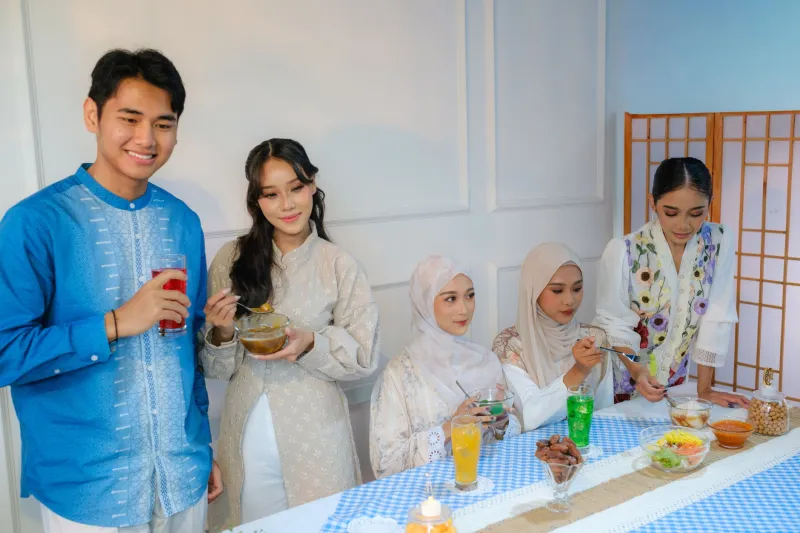
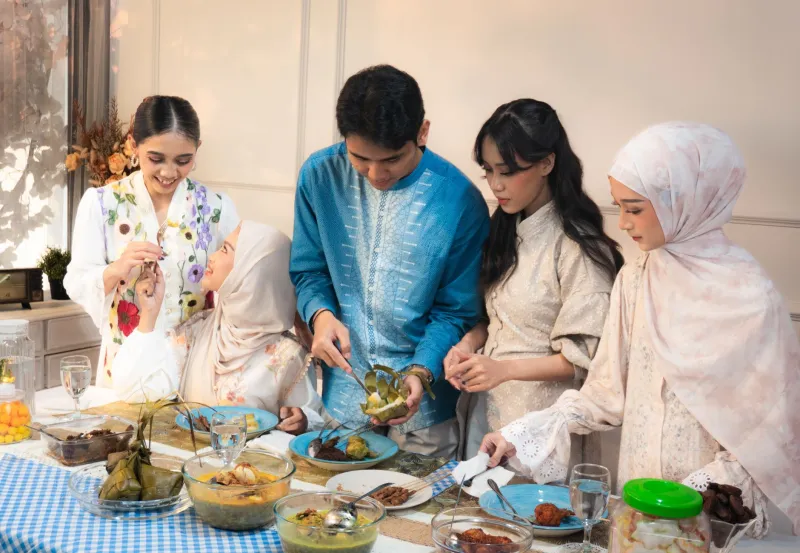
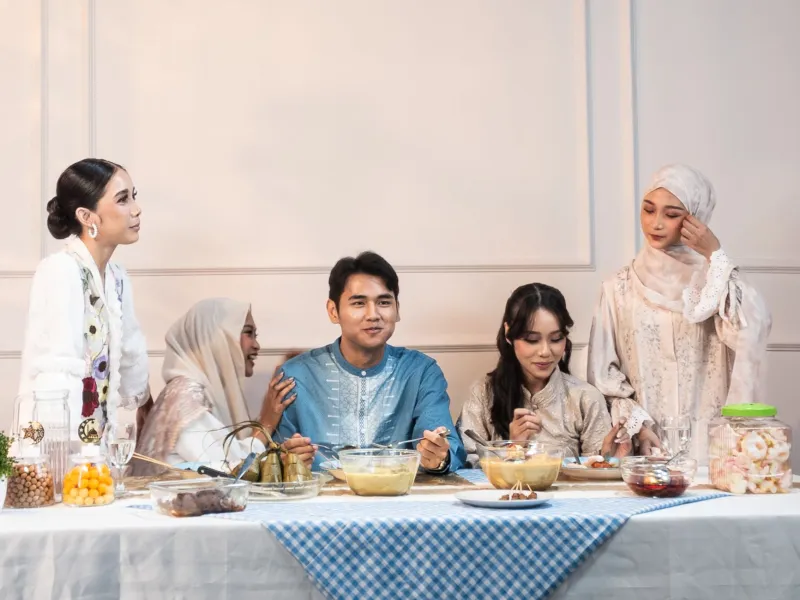
Food is probably the most visible place where berkat plays out in Malaysian life. Sharing a meal isn't just a social nicety — it's practically a spiritual act. The concept of makan beramai-ramai (eating together in a group) is baked into celebrations, weekday dinners, and casual drop-ins alike. Dishes are made generously, portioned loosely, and offered first.
What's striking is the underlying belief that goes with the food: the more you give away, the more you are blessed in return. This isn't transactional. There's no ledger being kept, no expectation of reciprocity on a timeline. It's more like a deep cultural trust that generosity circulates, and that being part of that circulation is its own reward.
You see this at kenduri — communal feasts held for weddings, births, religious observances — where entire neighborhoods contribute food and labor, and somehow the table is always full. You see it in the way Malaysian aunties insist on sending guests home with containers of leftovers, not because they have too much, but because sending you home fed is part of what the meal means.
Beyond the Kitchen: Berkat in Everyday Lending and Giving
The philosophy extends well past food. In many Malaysian households and communities, lending is natural and ungrudging. A neighbor needs a tool? You lend it without tracking when it comes back. A family member is short on cash this month? You cover it without making it weird. Someone new moves into the area? You bring something over.
This isn't because Malaysian families are uniformly wealthy or without their own needs. Many aren't. It's because the cultural default is oriented toward sufficiency rather than hoarding — toward the belief that holding things too tightly is actually what creates lack, not the other way around.
Elders will often tell younger family members that being stingy (kedekut) doesn't protect your resources — it stagnates them. The blessing, they say, comes through the giving. Keeping everything locked up doesn't make you safer. It just makes you smaller.
The Scarcity Mindset Problem Americans Know Too Well
In the US, scarcity mindset is practically a cultural epidemic. Researchers and psychologists have written entire books about it — the way that feeling like there's never quite enough distorts decision-making, strains relationships, and keeps people locked in cycles of anxiety even when their material circumstances are objectively fine. It shows up in how Americans talk about time, money, food, opportunity. There's a constant undercurrent of what if it runs out.
Berkat offers a direct counter-narrative, and it's one that doesn't require a religious framework to appreciate. At its core, it's a community reciprocity model. When everyone operates from a posture of sharing, the group as a whole has more stability. The person who gives freely today is the person whose community shows up for them tomorrow. The table that feeds the neighbor is the table that gets restocked.
This is actually consistent with what social scientists call "gift economies" and what community psychologists describe as the mechanics of strong social capital. Trust, generosity, and interdependence create resilience. The Malaysian cultural tradition of berkat has been quietly practicing this for generations.
What Bringing Berkat Into Your Own Life Might Look Like
You don't have to be Malaysian, or Muslim, or even particularly spiritual to start experimenting with this mindset. The practical shifts are pretty accessible.
Start with food. Cook a little more than you need and bring the extra to a neighbor, a coworker, or a friend who's had a hard week. Notice how it feels to give without calculating whether you can afford to.
Lend freely. If someone asks to borrow something you don't urgently need, say yes. Let the thing circulate. Trust that it comes back, or trust that you'll be okay if it doesn't.
Reframe abundance. Instead of measuring what you have by what you're holding onto, try measuring it by what you're able to give. This is a genuine mental shift, and it takes practice, but it changes the texture of daily life.
Invest in your community's table. Whether that's a neighborhood potluck, a community fridge, or just consistently being the person who brings something when you come — participate in the circulation. Berkat isn't a solo practice. It needs a community to move through.
The Blessing That Moves
Malaysian families who carry berkat into their daily lives aren't operating on blind faith alone. They've watched it work — watched generosity create connection, watched sharing build trust, watched open hands attract more than closed fists ever did. It's a philosophy forged through generations of communal living, of knowing that your neighbor's wellbeing and your own are not separate concerns.
In a culture that often tells us to secure our own oxygen mask before helping anyone else, berkat whispers something different: sometimes the act of helping someone else breathe is exactly what fills your own lungs.
That's not a bad way to live. And it might just be the abundance strategy America didn't know it was missing.